What are dinghy davits, and why do boat owners use them? Dinghy davits are marine lifting systems that help raise, lower, and store a small boat, often called a tender. They are commonly fitted near the stern of a yacht, cruiser, trawler, or other suitable vessel.
A dinghy davit system helps boat owners move a tender between the water and a secure storage position. Different designs use manual gears, winches, electric power, or lifting arms. This guide explains the main types, their parts, how they are used, and what makes a good davit system.
What Is the Purpose of Dinghy Davits?
The main purpose of dinghy davits is to support the safe handling and storage of a tender. Many larger boats carry a small dinghy for getting to shore, reaching a dock, or moving around an anchorage. Inflatable boats and rigid inflatable boats (RIBs) are common choices because they are practical for short trips.
However, storing a dinghy can be difficult when it includes an outboard motor, fuel tank, and other equipment. A suitable davit system provides a controlled lifting method. Depending on its design, it may also help reduce towing, save deck space, and keep the tender ready for use.
You can explore examples of modern boat davit systems at SeaWise Marine.
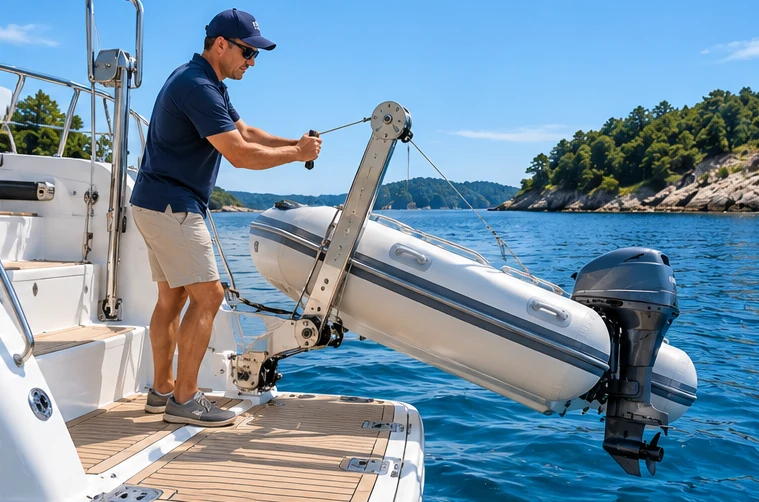
What Are the Main Types of Dinghy Davits?
Not all davits work in the same way. Their shape, lifting method, and mounting location vary based on the main boat and tender.
1. Swim-Platform Davits
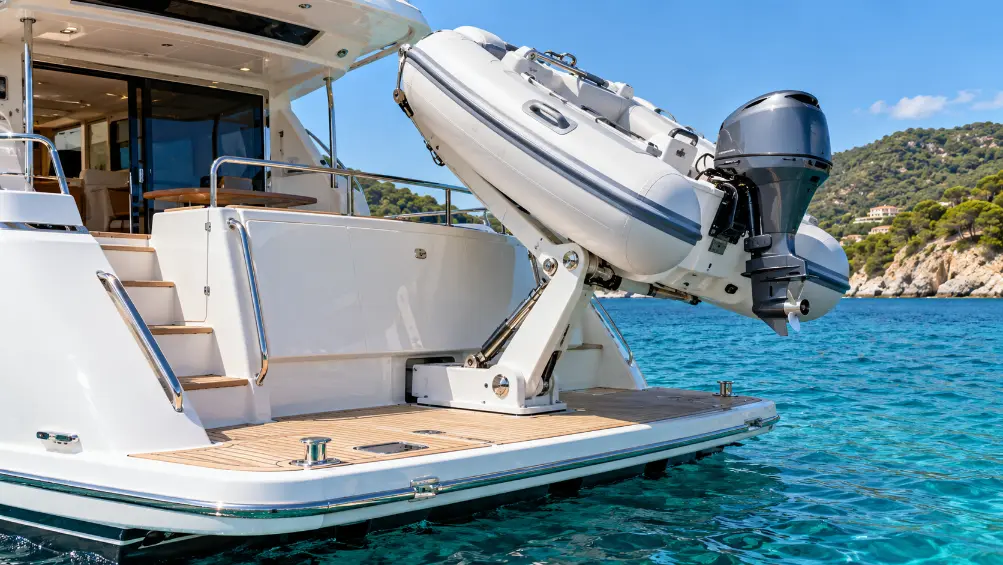
Swim-platform davits are mounted on or near the platform at the back of a vessel. They are often used on motor yachts, cruisers, and trawlers with suitable stern structures. Depending on the design, the tender may rest on supports or rotate into an upright storage position.
The aim is to keep the tender secure while preserving as much useful platform space as possible. Exact clearance depends on the tender and mounting layout. Learn more about dinghy davits for swim platforms.
2. Transom-Mounted Davits
The transom is the rear section of the main boat’s hull. Some davit systems attach to suitable transom structures or use mounting arrangements connected to the stern. These systems may support a tender close to the back of the vessel. Certain designs lift and rotate the dinghy into a stored position.
The main benefit is an integrated storage arrangement. However, the structure must be strong enough to support the approved loads.
3. Snap Davits
Snap davits are commonly used with smaller, lighter dinghies. They usually rely on connection fittings or pads that attach the tender to the main boat. A compatible tender can be secured and moved into a storage position using the system’s approved method.
These systems are generally simpler than larger powered davits. They may not suit heavier RIBs, large outboard motors, or boats that need a greater lifting capacity.
4. Manual Dinghy Davits
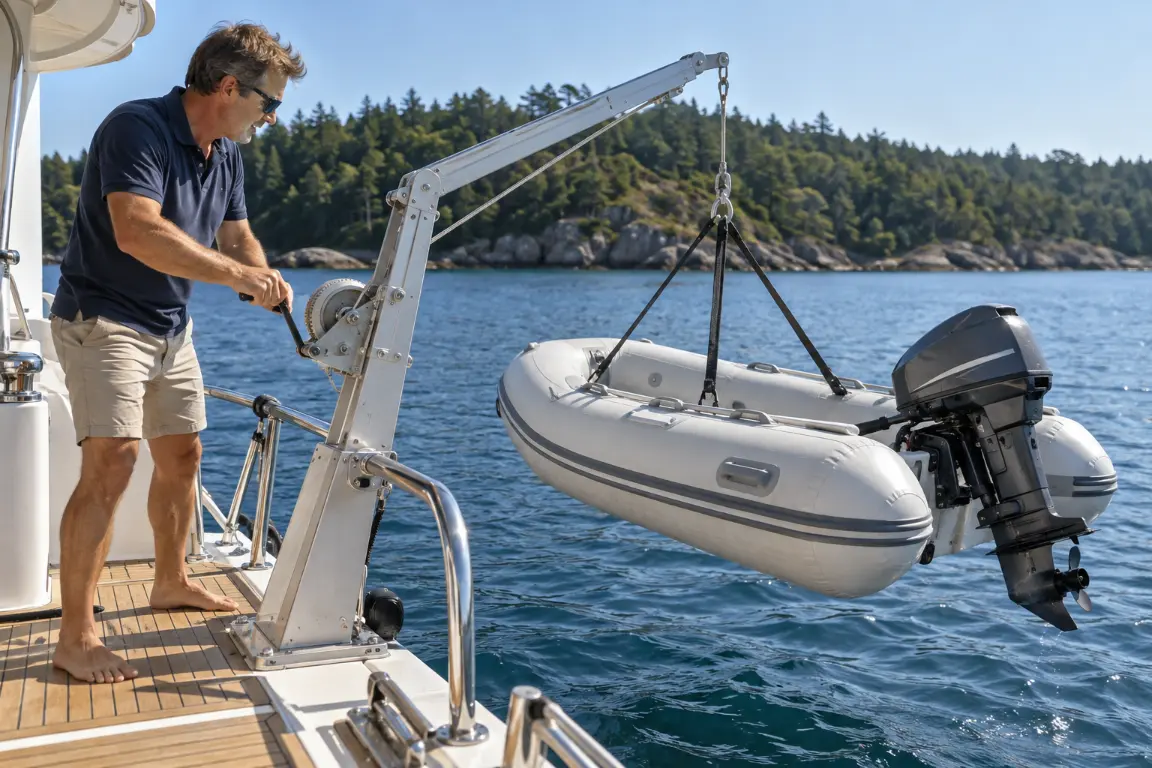
Manual dinghy davits use human input to operate a lifting mechanism. This may involve a hand crank, winch, or geared drive. The mechanical system reduces the effort needed to lift a compatible load. No electrical lifting power is required.
For example, the SeaWise Manual Davit uses a 25:1 worm-gear mechanism and has a rated lifting capacity of up to 450 pounds for approved tender and vessel arrangements.
5. Electric Dinghy Davits
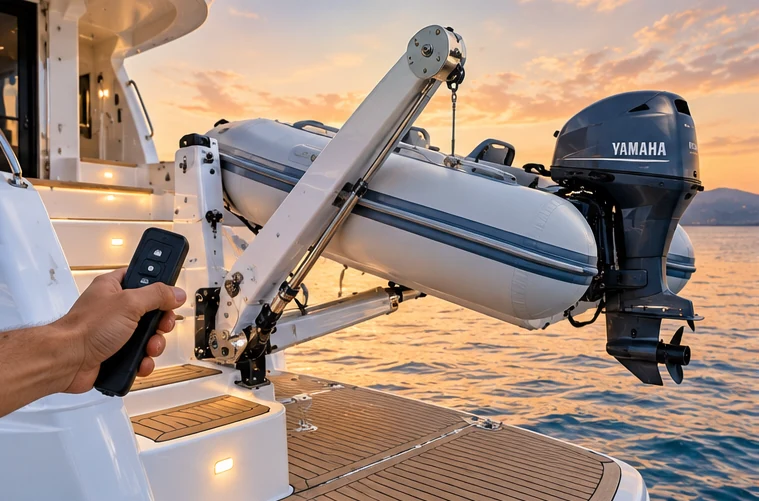
Electric dinghy davits use powered equipment to help lift and lower a tender. The operator controls the lifting movement through the system’s approved controls. These davits are often considered for heavier RIBs or owners who want less physical effort during tender handling.
Powered systems need suitable electrical connections and protective equipment. The correct capacity and installation depend on the selected model. Explore the SeaWise Electric Davit System for an example of a powered tender lift.
6. Crane-Style Davits
Some larger yachts use compact marine cranes or lifting booms. These systems may lift a tender onto a deck or into another storage area. They can be useful when the vessel has a suitable lifting location away from the swim platform.
Crane arrangements differ from rotating stern davits because they may use a boom and hoist to move the tender through a wider lifting path.
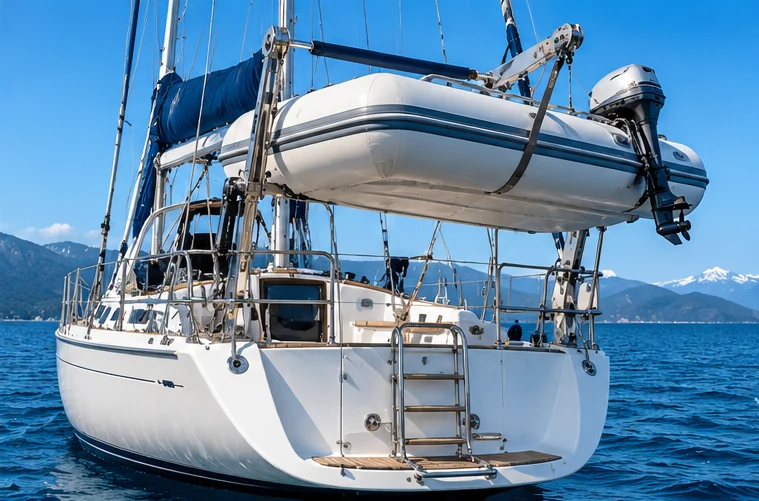
What Are the Main Parts of a Dinghy Davit System?
Although designs vary, most davit systems have several important parts.
| Component | Main Purpose |
|---|---|
| Mounting brackets | Connect the system to an approved vessel structure |
| Lifting mechanism | Provides the force needed to raise or lower the tender |
| Arms or support frame | Help carry and guide the tender |
| Pivot or rotation points | Allow movement in systems designed to rotate |
| Winch, gears, or motor | Control lifting force |
| Cable or other lifting parts | Transfer force where the design uses them |
| Securing equipment | Hold the tender in its approved storage position |
Each part plays a role in the complete system. The equipment must work together and remain within the manufacturer’s stated limits. This is why boat owners should choose a complete, compatible lifting arrangement rather than mixing unrelated parts.
What Boats Can Use Dinghy Davits?
Dinghy davits are used on many types of recreational and cruising vessels, including motor yachts, trawlers, powerboats, and some sailboats. A suitable installation depends on the boat’s stern shape, mounting structure, available space, and approved load limits.
For example, a trawler with a large swim platform may have more mounting options than a smaller cruiser with a narrow stern. A sailboat may need special attention to backstays, ladders, steering gear, or other stern equipment.
SeaWise provides davit systems for different vessel configurations, including selected cruisers and trawlers. Compatibility must be confirmed for each installation.
What Size Dinghy Can a Davit Lift?
A davit’s lifting ability depends on its rated capacity and the approved installation. You should never select a system based only on the dinghy’s length. Two tenders of the same length may have very different weights.
The complete lifting weight can include the hull, outboard motor, fuel, battery, console, anchor, and equipment left aboard. It is also important to consider how the load is supported and how the weight affects the main vessel. For help with these factors, read how to determine the right davit size.
Can Dinghy Davits Keep the Outboard Motor Attached?
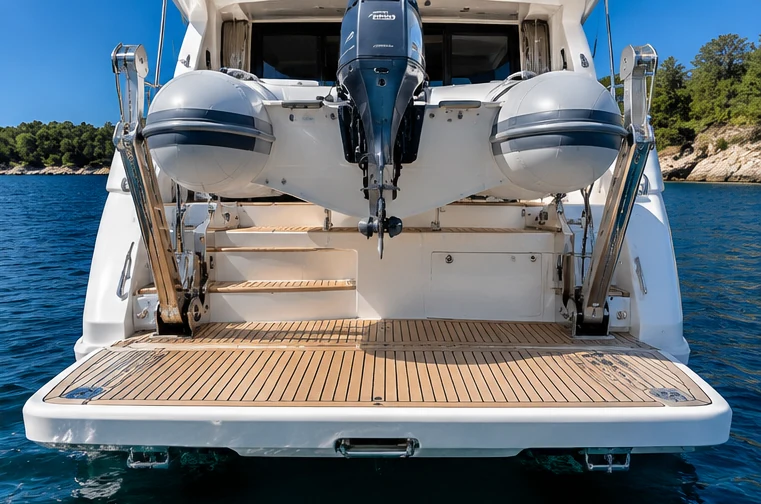
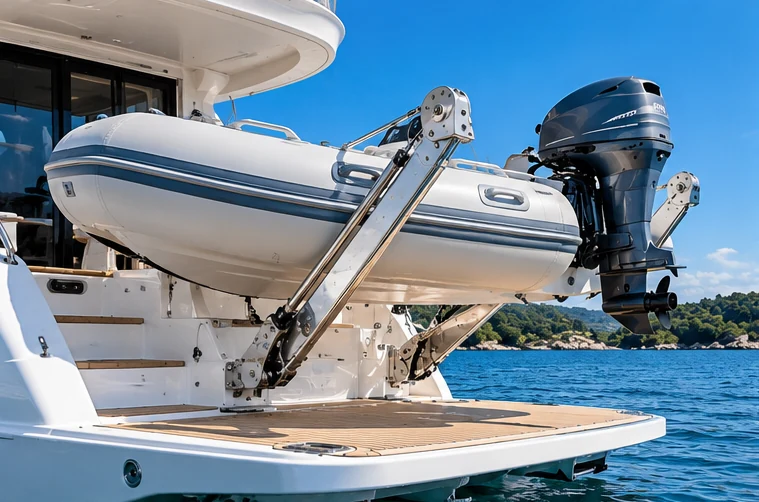
Some dinghy davits allow the outboard motor to stay on the tender during lifting and storage. This can reduce the need to move a heavy engine by hand. SeaWise Marine uses a rotating storage design that maintains the outboard’s upright orientation on compatible setups.
This approach is different from storage methods that require the tender or engine to lie in a different position. However, keeping the motor attached is only suitable when the complete tender, outboard, davit, and vessel arrangement are approved for that use.
What Materials Are Dinghy Davits Made From?
Marine davits may use stainless steel, aluminum, galvanized steel, or combinations of materials. The right material depends on the system’s design, operating loads, exposure, and maintenance needs. Saltwater creates a demanding environment for lifting equipment. Corrosion can affect fittings, fasteners, moving parts, and structural components over time.
SeaWise uses electro-polished 316L stainless steel in its marine davit structures. This material has good corrosion resistance, but it still requires inspection and care. Read more about 316L stainless steel for marine hardware.
Are Dinghy Davits Easy to Maintain?
Maintenance needs depend on the lifting method, materials, installation, and frequency of use. Owners should follow the manufacturer’s instructions for inspections, cleaning, and servicing. Common checks include cable condition, mounting hardware, corrosion, and unusual movement or noise.
Powered systems may also need checks of electrical connections and controls. Any damaged or worn parts should be assessed before further operation. Our boat davit maintenance guide explains what owners should watch for.
Frequently Asked Questions About Dinghy Davits
What is the difference between a dinghy and a tender?
A dinghy is a small boat that may be rowed or powered by an outboard motor. A tender is a boat used to support a larger vessel. Many dinghies serve as tenders, so the terms often overlap.
Can one person operate dinghy davits?
Some davit systems are designed for one-person operation. This depends on the model, load, installation, operating conditions, and user training. Always follow the approved operating instructions and keep people clear of moving loads.
Are dinghy davits only for yachts?
No. Dinghy davits can be used on different vessels with suitable mounting structures. These may include trawlers, cruisers, motor yachts, and some sailboats.
Do all dinghy davits need electricity?
No. Manual systems use mechanical lifting methods such as hand cranks and gears. Electric davits use powered lifting equipment and require a suitable electrical supply.
Do dinghy davits take up the whole swim platform?
Not always. Some systems store the tender upright near the transom, leaving more space available. The amount of clear space depends on the boat, tender dimensions, and installation.
Understanding Dinghy Davits Before You Buy
Dinghy davits are practical marine lifting systems that help boat owners manage tender storage, launching, and retrieval. The best type depends on your tender’s fully loaded weight, main vessel structure, storage space, and preferred lifting method.
Understanding these basics makes it easier to compare equipment without focusing only on price or appearance. At SeaWise Marine, you can explore manual and electric tender lifting systems and view real installation examples. For guidance on your specific boat, contact the SeaWise team.