How do dinghy davits work on a boat? Dinghy davits use mechanical or powered lifting equipment to raise a small tender from the water and move it into a storage position. The system supports the tender’s weight through a set of mounting brackets, lifting parts, and structural supports.
Some davits lift a tender using arms and cables. Others use a rotating mechanism to move the boat toward the transom. The exact process depends on the davit’s design and the vessel where it is installed. Understanding these systems can help boat owners choose the right equipment and use it with greater confidence.
How Does a Dinghy Davit System Work?
A dinghy davit works by transferring lifting force from a winch, gear system, or motor to the tender. The force moves the dinghy through an approved lifting path while the davit’s structure supports the load. The lifting system is connected to the main vessel through suitable mounting hardware. These connections transfer the force and weight into the boat’s supporting structure.
Once the tender reaches its storage position, the approved retaining equipment keeps it secure. In simple terms, the system performs three main tasks: lifting the tender, guiding its movement, and supporting it during storage.
For an overview of available systems, visit SeaWise Marine.
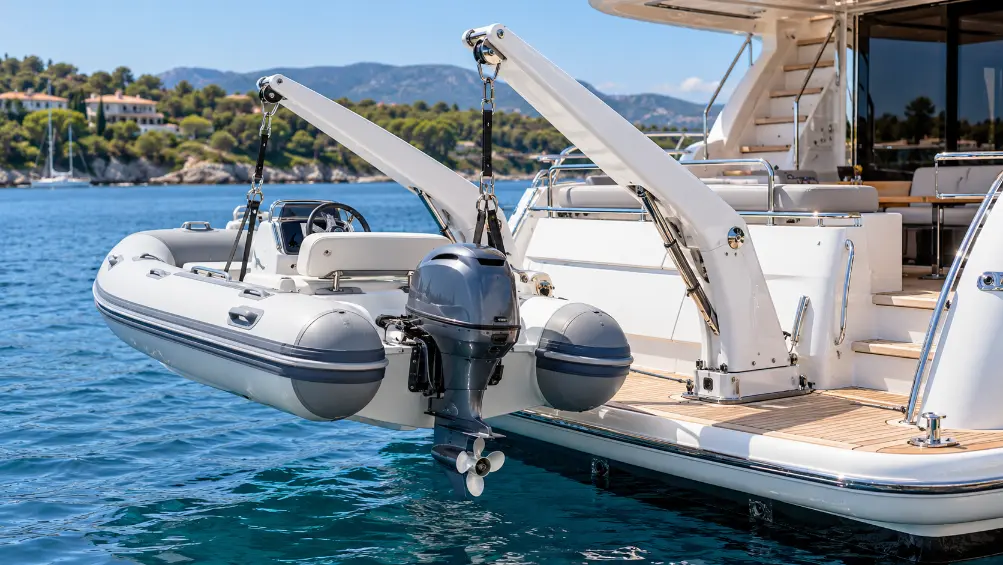
The Main Mechanical Parts and How They Work
Several parts work together to move and support a tender. Their size and arrangement depend on the davit design.
Mounting Brackets and Structural Supports
Mounting brackets connect the davit to approved sections of the main vessel. These may be near the transom or swim platform. The brackets must handle the forces created during lifting, lowering, and storage. They also help keep the equipment correctly aligned.
A davit can place bending and pulling loads on its mounting points. For this reason, strong hardware alone is not enough. The supporting structure of the boat must also be suitable.
Lifting Gear or Winch
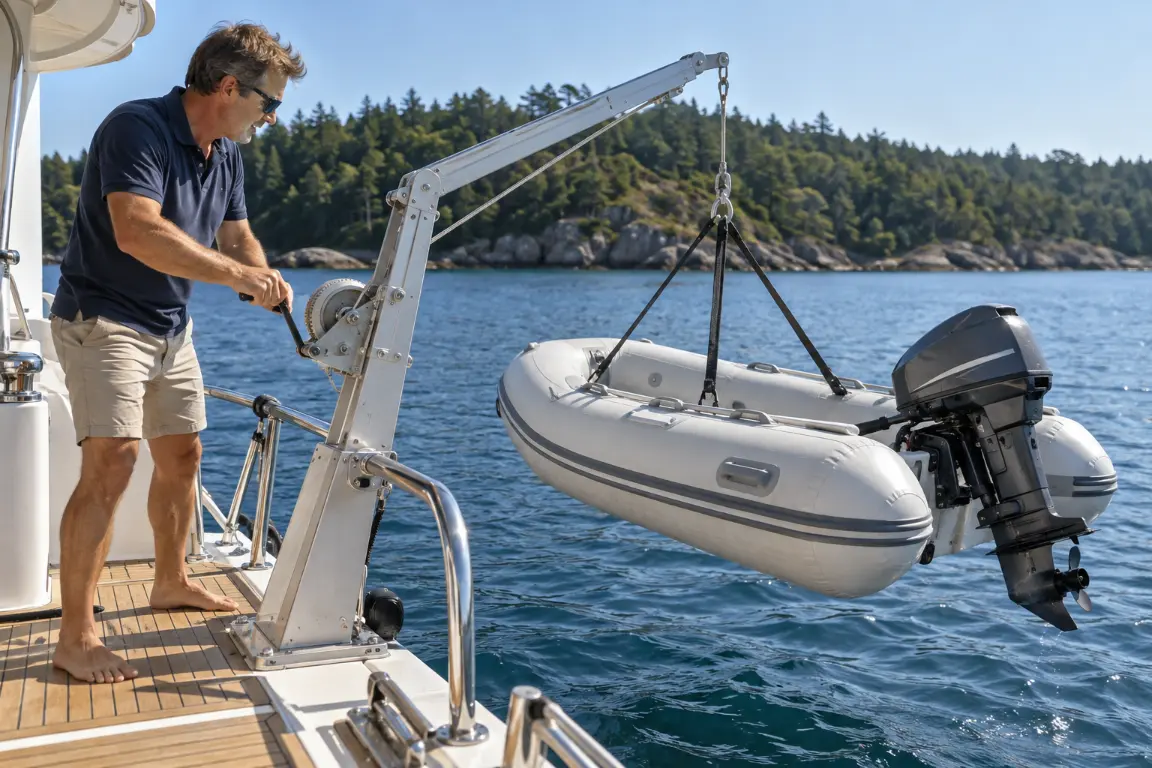
The lifting mechanism produces the force needed to move the dinghy. In a manual davit, the operator may turn a handle connected to a geared winch. The gears help make lifting a heavy load more manageable.
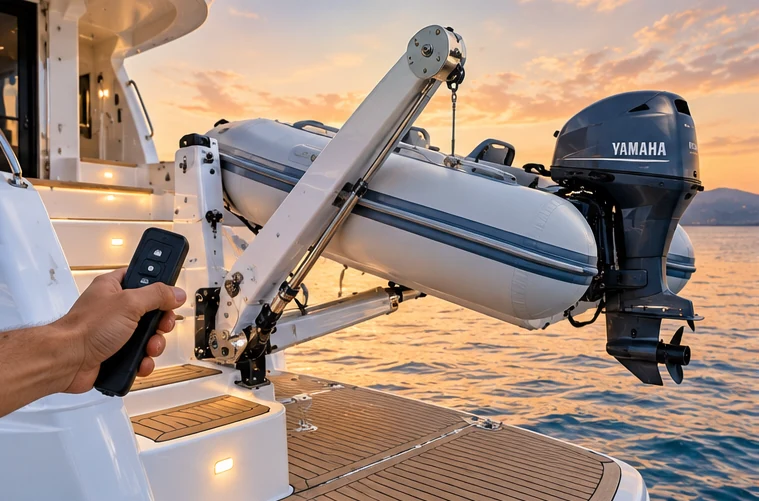
In an electric davit, powered equipment provides the lifting force. The operator uses the approved controls rather than relying on a hand crank for the main lifting action.
Lifting Cable and Moving Components
Some davit systems use cables, drums, pulleys, or related lifting parts. These guide and transfer force as the tender moves. The lifting cable or other load-bearing connection must be suitable for the system and kept in good condition.
A worn cable, damaged fitting, or poorly aligned component can affect operation. These parts should be checked according to the manufacturer’s maintenance instructions.
Pivot and Rotation Mechanisms
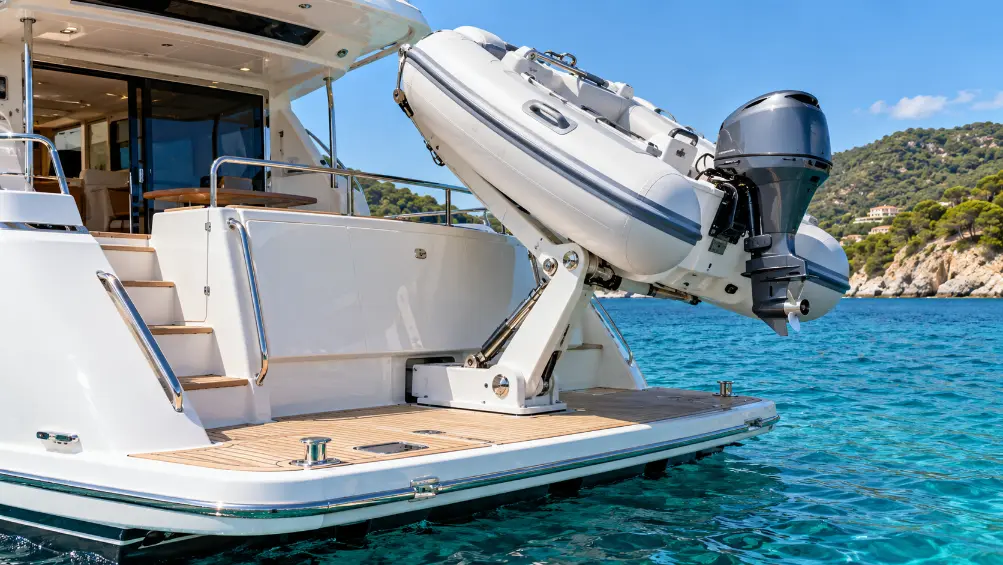
Some stern-mounted davits use pivot points to move a dinghy through an arc. Instead of lifting the tender straight up onto a deck, they rotate it into position. This is useful on certain motor yachts and trawlers because a rotating design can reduce the need for a large overhead crane.
The position of the tender, outboard, and mounting hardware must be considered throughout the movement.
Storage Supports and Retaining Equipment
Lifting the dinghy is only part of the job. It must also remain secure after retrieval. Approved storage supports, locks, straps, or other retaining equipment help control the tender while it is carried.
The lifting mechanism should not be treated as a substitute for the manufacturer’s required storage restraints.
How Do Manual Dinghy Davits Work?
Manual dinghy davits use a mechanical advantage to make lifting easier. A crank drives a gear or winch that moves the tender through its approved lifting path. The SeaWise Manual Davit System uses a 25:1 worm-gear reduction mechanism.
This means the handle turns many times for each full turn of the driven gear assembly. The gear reduction lowers the force needed at the handle, although lifting still requires time and effort. The SeaWise manual system also includes a self-braking design to help prevent uncontrolled reverse movement during normal operation.
It is rated for compatible fully loaded tenders weighing up to 450 pounds, subject to approved installation requirements. Manual davits can be useful for boat owners who want a lifting system that does not depend on electrical power.
How Do Electric Dinghy Davits Work?
Electric dinghy davits use a powered lifting mechanism to raise or lower a tender. The system draws power from an approved electrical supply and operates through its controls. Depending on the product, the lifting equipment may include a motor-driven winch or another powered mechanism.
The SeaWise Electric Davit System offers switch-controlled lifting for compatible tender installations. It is intended to reduce the physical effort needed when handling larger or heavier dinghies.
The system must have suitable wiring, circuit protection, and mounting arrangements. Power requirements and load limits should always be checked against the selected model’s specifications. Electric operation may be useful for owners who frequently launch their tender or want more convenient control over a heavier load.
For a closer comparison, read electric vs. manual davits.
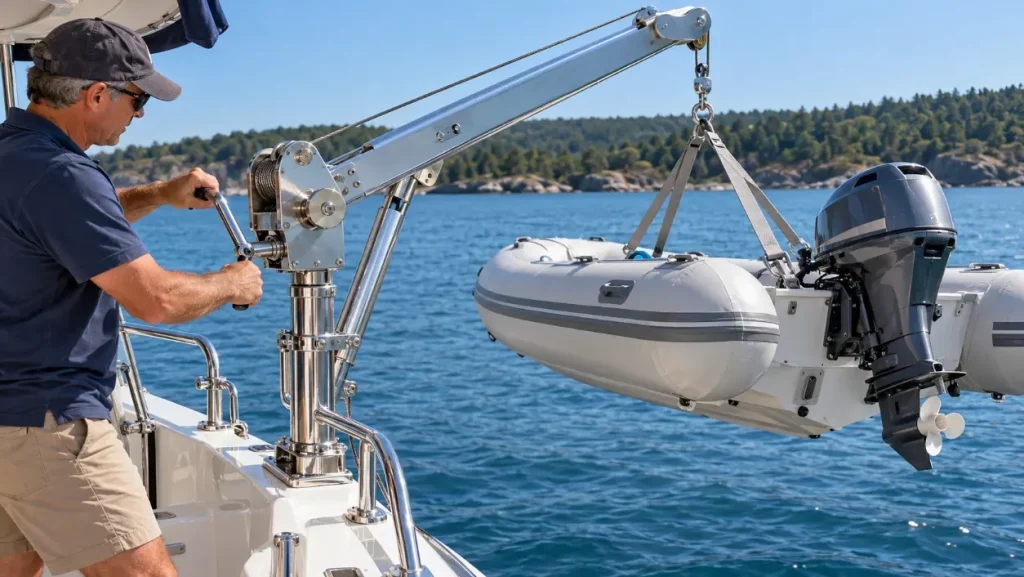
How Do Rotating Dinghy Davits Keep the Outboard Upright?
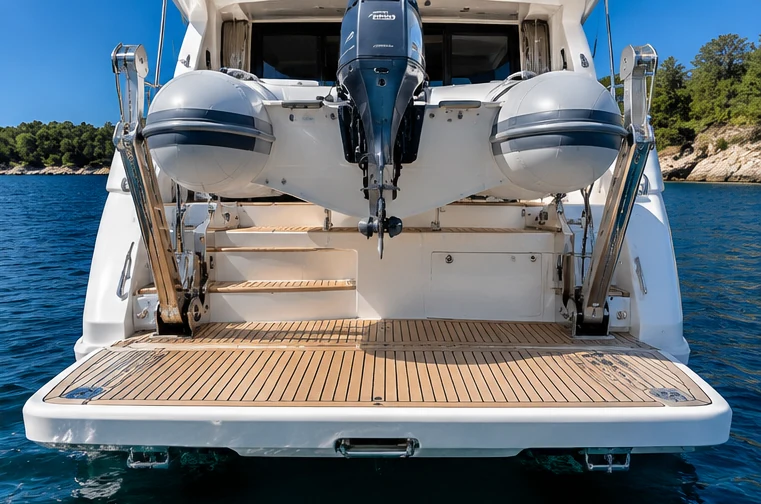
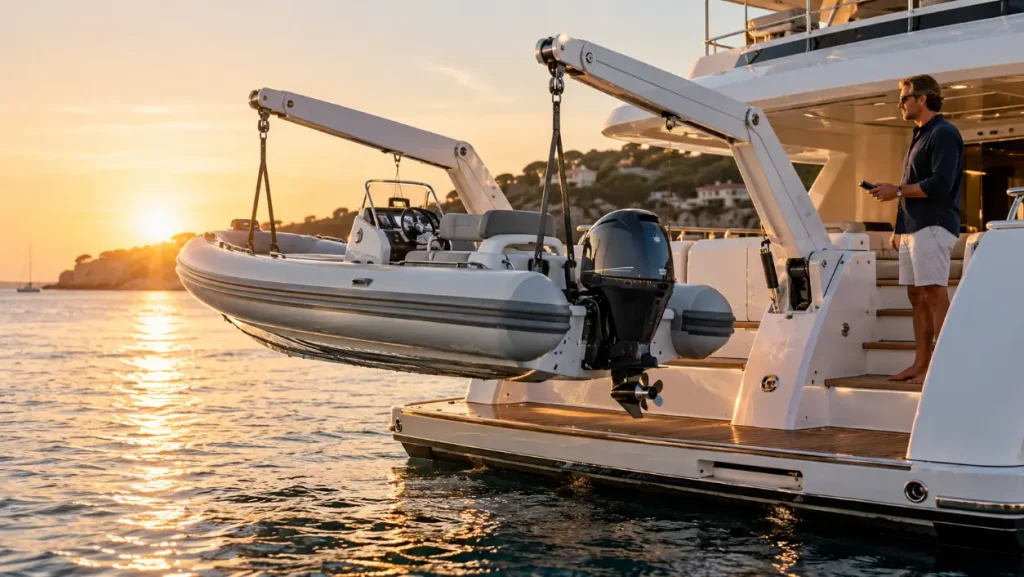
Some traditional storage systems carry a tender in a flat or raised position. Other designs move the dinghy through a rotation near the stern. SeaWise uses a patented rotating arrangement designed to maintain the outboard motor’s upright orientation on compatible installations.
As the dinghy moves from the water toward storage, the system guides its position while keeping the engine properly oriented. This can reduce the need to remove and reinstall the outboard every time the tender is used.
However, motor-on storage is not suitable for every combination of dinghy, engine, and vessel. The complete arrangement must meet approved weight and clearance requirements. Read about dinghy storage with the outboard attached for further details.
What Happens During Tender Retrieval?
A typical retrieval cycle begins with the tender in the water and the lifting arrangement ready for use. The approved connection points and lifting equipment support the tender as the mechanism raises or rotates it toward the main vessel.
During this movement, the system must keep the load under control. The available space around the swim platform and transom must remain clear. Once the tender reaches its storage position, the operator secures it using the equipment required by the manufacturer.
The actual sequence differs between davit models. Boat owners should use their model-specific operating manual rather than treating this general explanation as an operating procedure. For safety guidance, see how to launch a dinghy with a davit system.
How Do Davits Support the Weight of a Tender?
A davit must handle more than the empty weight of the dinghy. The total suspended load may include the hull, outboard motor, fuel, battery, and other equipment left aboard during lifting. The location of that weight also matters. As the tender moves away from or toward the stern, it creates forces on the brackets and main vessel.
The system’s rated capacity, mounting strength, balance, and movement path must all be suitable for the installation. This is why a heavy center-console RIB may require a different system from a lightweight inflatable tender, even when both boats are similar in length.
Use the SeaWise davit sizing guide to review the measurements and weights needed for system selection.
What Makes Dinghy Davits Safe to Operate?
Safe operation depends on proper equipment selection, installation, maintenance, and user knowledge. A suitable davit must have enough rated capacity for the complete load. Its mounting structure must be approved, and the operator must understand the controls.
Before using the equipment, owners should follow the manufacturer’s required checks. These may include looking for damaged cables, loose fasteners, unusual movement, or problems with retaining parts. Weather and vessel movement also matter. A tender can swing or shift as the main boat moves, especially in difficult conditions.
Never stand under a suspended tender or bypass approved safety equipment. If a component shows signs of damage or unsafe operation, stop using the system and obtain qualified guidance.
Why Do Some Davits Become Hard to Operate?
A davit that becomes difficult to operate may have a mechanical, loading, or maintenance problem. Possible causes include worn components, corrosion, incorrect alignment, damaged parts, or a load that exceeds the approved capacity.
Manual systems may become harder to turn when there is extra resistance in the mechanism. Electric systems may show problems through poor movement, electrical faults, or unusual sounds. Do not force the controls or add an improvised extension to a crank handle. Identify the cause before further use.
For more detail, read why a manual davit handle becomes hard to turn.
Frequently Asked Questions
Do dinghy davits lift the whole boat?
No. A dinghy davit lifts the smaller tender carried by the main vessel. It does not lift the yacht or cruiser itself. The load must stay within the davit’s rated capacity.
How does a dinghy davit lift a heavy tender?
A davit uses mechanical advantage or powered equipment to create lifting force. The system transfers that force through its structure and lifting components to move the tender.
Do all davits rotate the dinghy?
No. Some davits raise a tender using lifting arms or a hoist. Others rotate it near the transom. The storage position depends on the system’s design.
Can a davit operate without electricity?
Yes. Manual davits use mechanical equipment such as hand cranks, gears, or winches. Electric davits rely on powered lifting equipment during normal operation.
Can one person operate a dinghy davit?
Some systems are designed for single-person operation. Whether this is suitable depends on the specific equipment, tender, installation, conditions, and operator training.
Understanding How Dinghy Davits Work
Dinghy davits use lifting force, structural supports, and controlled movement to raise and store a tender on a larger boat. Manual models use mechanical advantage, while electric systems provide powered lifting. Rotating davits can offer another way to store a tender near the stern.
The best design is one that handles the complete load safely and fits the main vessel. SeaWise Marine designs manual and electric davit systems for compatible cruising boats. You can also explore the SeaWise installation gallery or contact the team for help with a specific vessel.