Why Is My Manual Davit Handle Hard to Turn?
If your manual davit handle is hard to turn, stop operating the system until you understand why the resistance has changed. Excessive load, mounting or alignment problems, worn components, or an obstruction may contribute to difficult operation, but the actual cause requires appropriate inspection.
A manual dinghy davit uses a mechanical lifting arrangement to raise and lower a compatible tender. When the handle becomes unusually stiff, forcing it can damage equipment or create a hazardous situation.
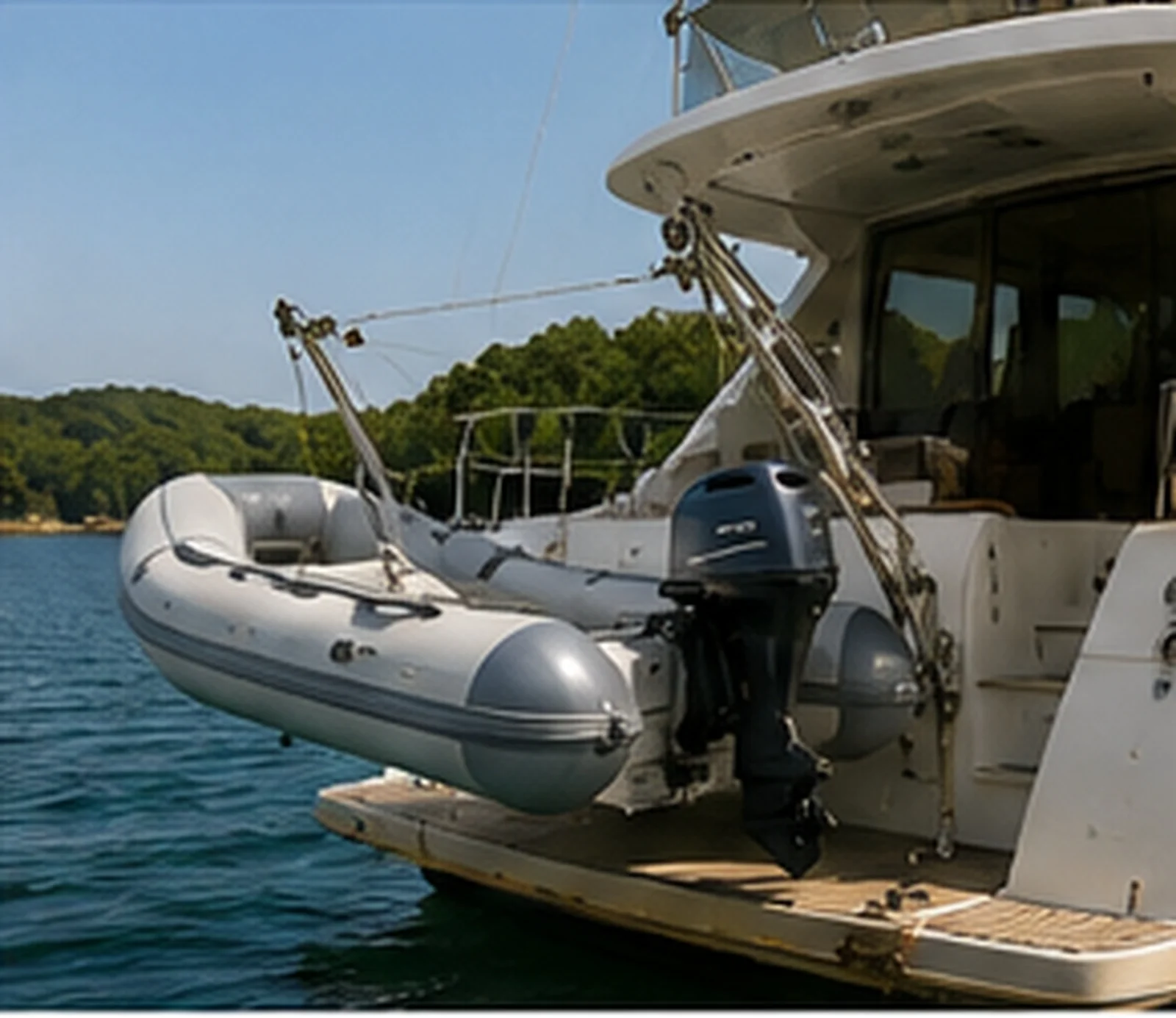
At SeaWise Marine, manual davit systems are designed for compatible dinghies and tenders, using a geared hand-crank mechanism to support single-person operation under approved conditions.
This guide explains possible reasons for increased handle resistance, what information to check, and when to seek professional assistance.
Why Is Your Manual Davit Handle Hard to Turn?
A hard-to-turn manual davit handle can indicate increased resistance somewhere in the lifting system.
Possible contributing factors include:
- Excessive tender weight: The fully loaded dinghy may exceed the approved system capacity.
- Mounting or alignment problems: Installation geometry or changes in the mounting arrangement may affect operation.
- Worn or damaged components: Mechanical parts can develop wear or damage over time.
- Cable or lifting-component problems: Where applicable, visible damage or irregular movement may require professional inspection.
- Obstructions: The tender, outboard, or davit components may lack adequate clearance.
- Maintenance concerns: Corrosion, contamination, and insufficient maintenance may affect mechanical performance.
These are possible causes, not a diagnosis. Do not attempt to identify a fault by forcing the handle or disassembling loaded lifting equipment.

How Does the SeaWise Manual Davit System Work?
The SeaWise Manual Davit System uses a geared hand-crank mechanism to launch and retrieve compatible dinghies without electrical lifting power.
The system is designed to maintain the outboard motor’s orientation during compatible tender handling.
According to the supplied SeaWise product information, key features include:
| Feature | Manual Davit System |
|---|---|
| Lifting capacity | Up to 450 lbs (204 kg) |
| Operation | Geared hand crank |
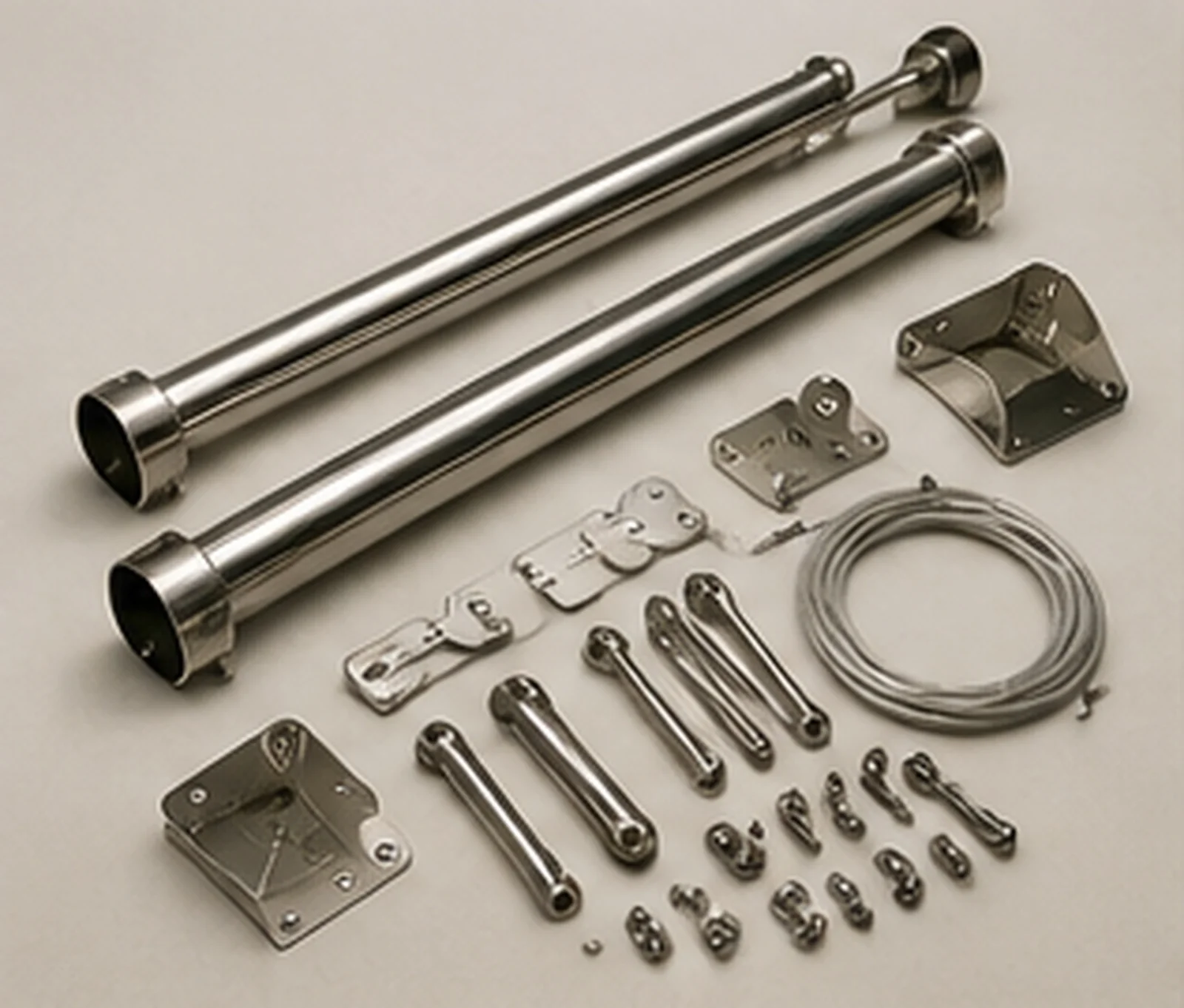
| Construction | Electropolished 316L stainless steel |
| Outboard orientation | Automatically maintained |
| Installation documentation | Comprehensive installation manual |
| Warranty | 5-year limited warranty |
The precise gear ratio, handle configuration, and mechanical securing arrangements should be confirmed using the documentation for the installed model.
For model information, review the SeaWise Manual Davit System.
Cause 1: The Fully Loaded Tender May Be Too Heavy
Excessive tender weight is one possible reason for increased operating resistance.
The manual davit system’s supplied specifications list a maximum lifting capacity of 450 lbs (204 kg), subject to the approved configuration and installation requirements.
The fully loaded weight may include the dinghy, outboard motor, fuel, batteries, equipment, and any accessories that remain aboard during lifting.
Why Dry Weight Can Be Misleading
A tender’s advertised dry weight may exclude equipment that contributes to the actual load.
For example, a dinghy may have a published hull weight that appears compatible with a manual system. Once the outboard motor, fuel, and installed accessories are included, the complete weight may exceed the davit’s approved rating.
What Should You Do?
Compare the fully loaded tender weight against the approved system specifications.
If the load is unknown, obtain reliable equipment weights rather than estimating or attempting to lift the tender to test its suitability.
Do not continue operating a davit suspected of carrying an excessive load.
For additional information, read How to Determine the Right Boat Davit Size.
Cause 2: Mounting Geometry or Alignment Problems
Davit operation depends on an appropriate mounting arrangement and adequate clearance throughout the intended lifting movement.
If mounting components are misaligned, damaged, loose, or unsuitable for the vessel, the system may not operate as intended.
Potential warning signs include unusual resistance, unexpected movement, visible contact between components, or a change from the system’s normal operation.
What Should You Do?
Stop operation if you suspect a mounting or alignment problem.
Document any visible concerns and consult SeaWise or a qualified installer familiar with the specific system.
Do not loosen mounting hardware, modify brackets, or attempt to realign equipment while it supports a suspended load.
For installation considerations, see Can I Install a SeaWise Davit Myself?.
Cause 3: Cable or Mechanical Component Problems
Depending on the installed model and configuration, lifting components may experience wear, damage, contamination, or improper movement.
Potential warning signs can include visible fraying, deformation, unexpected noises, or irregular operation.
These conditions should not be treated as routine operating resistance.
What Should You Do?
If visible damage or abnormal operation is present, stop using the equipment and seek guidance based on the manufacturer-approved service instructions.
Do not attempt to manually respool a cable, dismantle the lifting mechanism, or release loaded components without an approved procedure and appropriate qualifications.
A qualified inspection may be necessary before the system returns to service.
Cause 4: Tender or Outboard Clearance Problems
The tender, outboard motor, and davit assembly must have sufficient clearance for the approved operating movement.
An obstruction or unexpected contact may interfere with normal operation.
Before using the system, the installation should have been assessed for compatibility with the main vessel and tender arrangement.
Warning Signs
Potential signs of a clearance concern include visible contact between the tender and vessel, interference around the outboard, or a sudden change in operating resistance.
If an obstruction is suspected, stop operation and consult the approved instructions.
Do not force the handle to move a tender past an obstruction.
For related information, read our guide on dinghy davits for swim platforms.
Cause 5: Wear, Corrosion, or Maintenance Concerns
Even corrosion-resistant marine equipment requires inspection and appropriate maintenance.
SeaWise manual davits use electropolished 316L stainless steel components. This material provides corrosion resistance, but it does not make the complete mechanical system immune to wear, contamination, or deterioration.
Over time, operating conditions and maintenance history may influence equipment performance.
Maintenance Considerations
Follow the inspection intervals and service procedures specified for the installed model.
Relevant observations may include visible corrosion, component damage, unusual sounds, changes in handle resistance, and loose or deteriorated hardware.
Any corrective maintenance should follow approved instructions and be performed by someone appropriately qualified for the task.
Learn more in the Boat Davit System Maintenance Guide.

What Should You Check When the Davit Handle Becomes Stiff?
If the handle suddenly becomes difficult to turn, the safest initial response is to stop operating the system.
The following table provides general observations to discuss with SeaWise or an appropriate service provider. It is not a mechanical repair procedure.
| Observation | Possible Concern | Recommended Response |
|---|---|---|
| Increased resistance during operation | Load, alignment, or mechanical issue | Stop operation and seek model-specific guidance |
| Visible component damage | Wear or equipment deterioration | Do not operate until assessed |
| Tender exceeds approved capacity | Overloading | Do not lift the tender with that system |
| Unusual noise or movement | Mechanical fault or obstruction | Stop and arrange inspection |
| Tender contacts the vessel | Clearance or installation issue | Do not force further movement |
| Resistance changes after maintenance | Service or adjustment issue | Have the work checked against approved instructions |
Avoid assuming that one visible symptom identifies the complete cause.
When Should You Contact SeaWise Marine?
Contact SeaWise when your manual davit behaves differently from normal, especially when increased handle resistance appears without a clear explanation.
Professional guidance is particularly important if:
- The tender’s fully loaded weight is uncertain.
- The handle becomes suddenly difficult to turn.
- Equipment shows visible damage or deformation.
- The davit produces unexpected sounds.
- The mounting arrangement has changed.
- The system has undergone recent repairs or modifications.
- A previous installation lacks complete model-specific documentation.
When contacting support, have the davit model, approximate installation age, vessel details, tender specifications, and a description of the problem available.
Photographs of visible concerns may also help the support team understand the situation, provided they can be taken safely without operating or approaching hazardous equipment.
Should You Upgrade from a Manual to an Electric Davit?
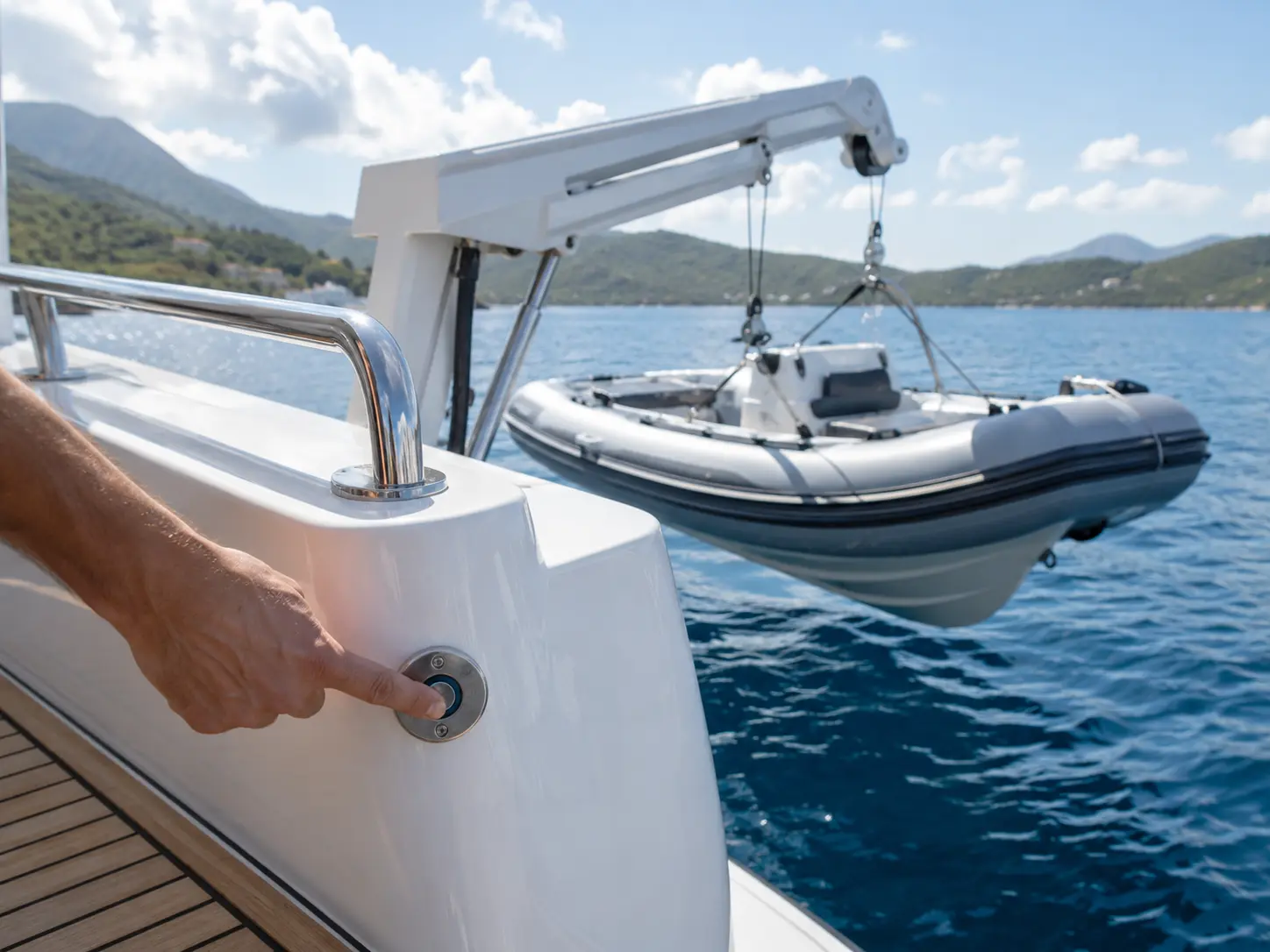
An electric davit may be worth considering if your tender is not suitable for the manual system or if powered operation better matches your preferences.
However, a stiff manual handle does not automatically mean an electric upgrade is required.
The underlying issue should first be understood, particularly if it involves vessel mounting, incorrect loading, or structural suitability.
SeaWise’s supplied product information lists:
| Feature | Manual Davit | Electric Davit |
|---|---|---|
| Lifting capacity | Up to 450 lbs (204 kg) | Up to 650 lbs (295 kg) |
| Operation | Geared hand crank | Switch-operated |
| Electrical lifting power | Not required | Required; confirm voltage |
| Construction | Electropolished 316L stainless steel | Electropolished 316L stainless steel |
Any replacement or upgrade must be assessed for the intended tender, vessel structure, and approved installation requirements.
Compare the options in Electric vs Manual Davits or explore the SeaWise Electric Davit System.

Frequently Asked Questions
Why is my manual boat davit suddenly hard to crank?
A sudden increase in resistance may indicate a load, mounting, obstruction, or mechanical issue. Stop operating the system and consult the approved instructions or qualified support rather than forcing the mechanism.
Can exceeding the weight limit make a davit handle harder to turn?
Excessive loading may contribute to difficult operation and presents a safety concern. The supplied SeaWise manual davit specification lists a lifting capacity of up to 450 lbs (204 kg), subject to approved conditions.
Should I lubricate the handle when it becomes stiff?
Do not assume lubrication will resolve the problem. Use only the maintenance procedures and materials approved for the installed model. Unexplained stiffness may require inspection.
Can I repair the davit cable myself?
Cable and lifting-component work can involve hazardous stored or suspended loads. Repairs should follow the manufacturer’s service instructions and be carried out by appropriately qualified personnel.
Does a stiff handle mean I need an electric davit?
Not necessarily. The cause of the resistance should be assessed first. An electric system may offer a different operating method, but it is not a substitute for resolving an unsafe installation or mechanical fault.
What is the maximum lifting capacity of a SeaWise manual davit?
The supplied SeaWise product information lists up to 450 lbs (204 kg). The installed system’s approved configuration and operating limitations must also be confirmed.
Does SeaWise provide technical support for existing davit systems?
The supplied SeaWise brochure identifies technical support for its davit systems. Contact SeaWise to confirm the support process and available assistance for your model.
Get Help with a Hard-to-Turn Manual Davit Handle
Unusual resistance should not be ignored or overcome by applying additional force.
SeaWise Marine can help you identify the relevant model documentation and discuss appropriate next steps for your davit system.
Phone: 604-946-0551
Email: derek@seawisemarine.com