Are dinghy davits worth it for your boat? For many boat owners, they are a useful investment that makes lifting, storing, and launching a tender easier. The right davit system can reduce physical work, improve dinghy storage, and make regular tender trips more convenient.
However, not every boat needs a davit system. The value depends on your tender’s weight, how often you use it, your boat’s design, and the total installation cost. This guide explains when dinghy davits make sense and what to consider before buying.
Are Dinghy Davits Worth the Investment?
Yes, dinghy davits are often worth the investment for boat owners who regularly use an inflatable tender or rigid inflatable boat (RIB). They provide a controlled way to lift the tender from the water and store it on the main vessel.
A properly selected system can reduce the need to tow a dinghy or lift heavy equipment by hand. Some davits also allow the outboard motor to remain attached during storage. For boaters who spend weekends at anchor, travel between marinas, or take longer cruising trips, these benefits can make a real difference. The key is choosing equipment that fits the boat and meets the full lifting requirements.
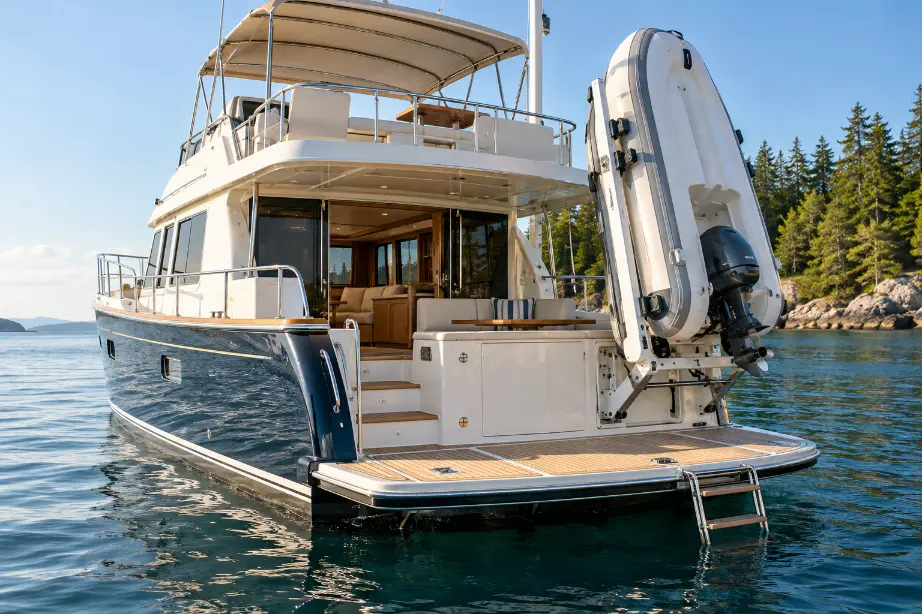
5 Benefits That Make Dinghy Davits Worth It
1. Easier Tender Launching and Retrieval
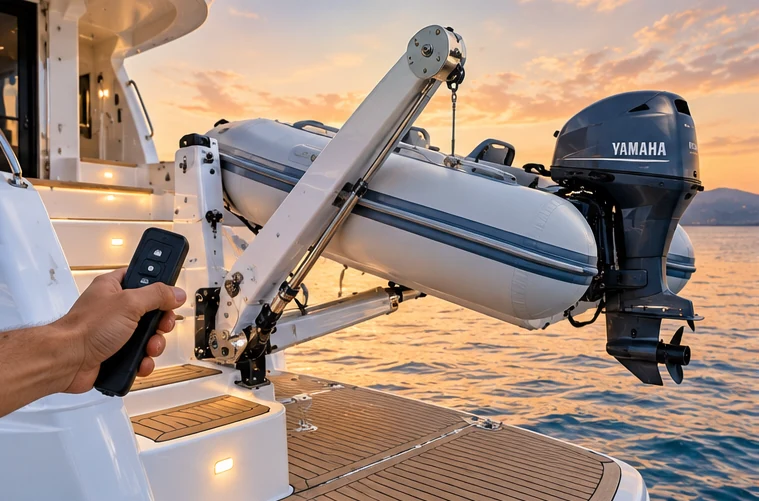
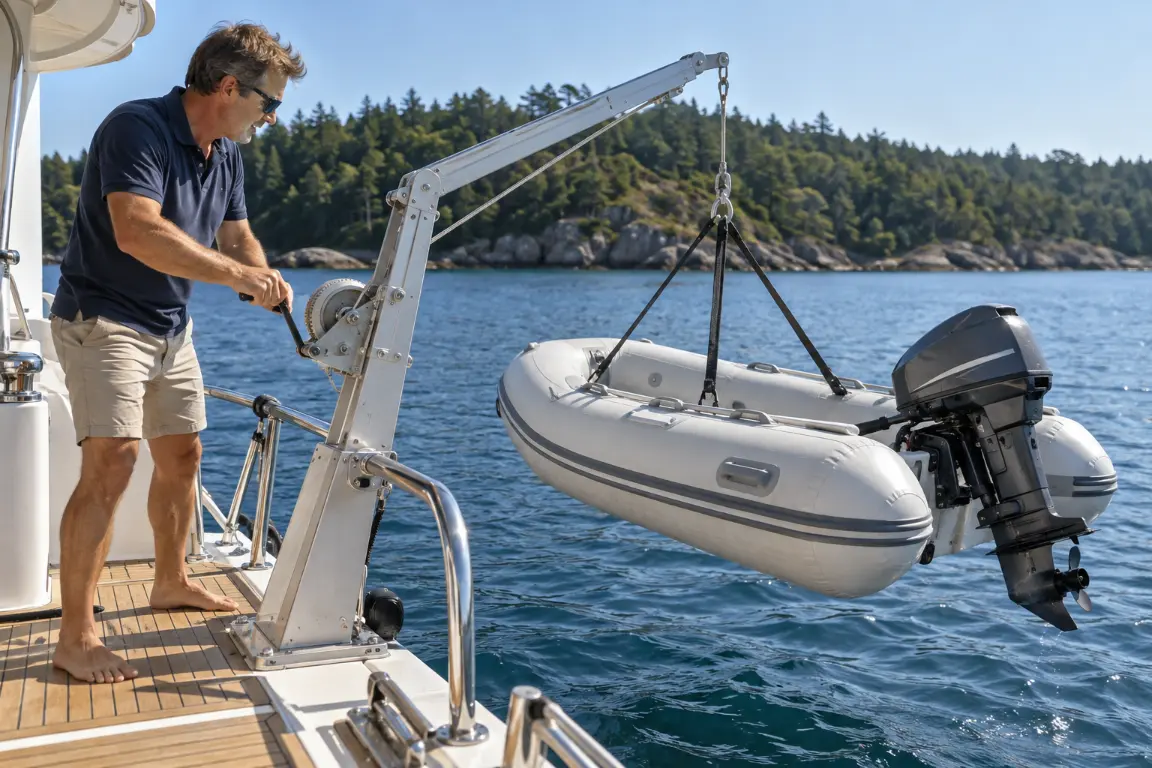
Moving a dinghy between the water and the main boat can take effort, especially when the tender has a heavy outboard motor. A dinghy davit system supports the tender during lifting and lowering. Instead of relying only on physical strength, the operator uses a manual lifting mechanism or powered system.
This is useful for boat owners who launch their dinghies often. It can also make routine tender handling more manageable for smaller crews. SeaWise Marine offers manual and electric boat davit systems designed for compatible tenders and vessels.
2. Less Need to Remove the Outboard Motor
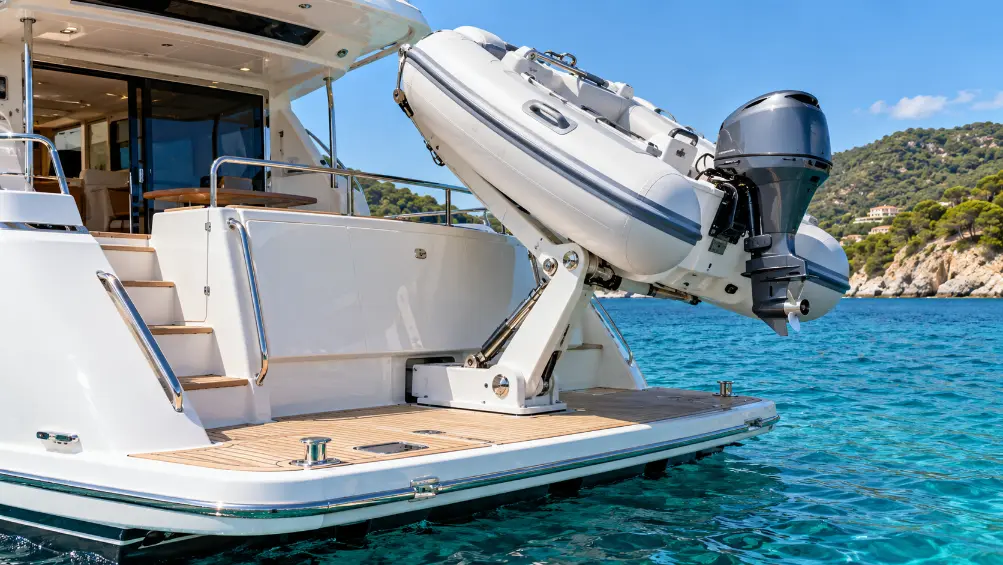
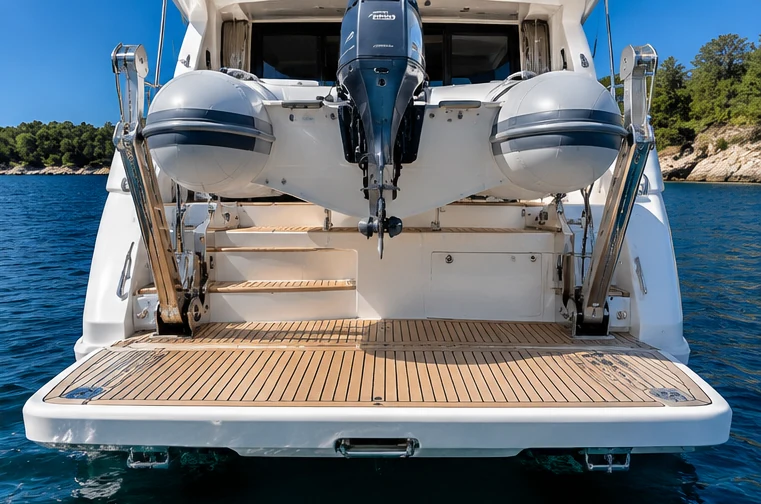
Removing an outboard motor before storing a dinghy can be difficult. Modern four-stroke engines may be heavy, and moving one across a wet swim platform creates added risk. Certain davit systems allow the tender to remain attached to its outboard during lifting and storage. This saves the work of removing, carrying, and reinstalling the engine.
SeaWise systems use a rotation design that keeps the outboard upright on compatible installations. This can be helpful for boat owners who use their dinghy regularly. Learn more about storing a dinghy with the outboard motor attached.
3. Better Use of the Swim Platform
A dinghy stored flat on a swim platform may take up much of the available space. It can block access to a boarding ladder, transom door, or walkway. Some davit systems move the tender into an upright storage position near the stern. This can leave more usable space on the platform.
However, the amount of clear space depends on the tender’s size, mounting hardware, and vessel layout. Boat owners should check the stored position before buying.
4. Less Dependence on Towing a Dinghy
Towing a tender behind the main boat requires planning and careful handling. The towline, tender movement, weather, and water conditions can affect the trip. A suitable davit system gives boat owners another storage option. The tender can be carried on the vessel instead of remaining in the water during travel.
This may be helpful on longer cruising routes or when moving between anchorages. The installation must still meet the vessel’s structural and operating limits.
5. More Convenient Boating Trips
A tender is often used for reaching shore, visiting nearby boats, or exploring an anchorage. If launching it is difficult, owners may use it less often. A well-fitted davit system can make that routine more practical. It can reduce repeated lifting and help keep the tender ready for use.
For frequent cruisers, this convenience may be more valuable than the equipment’s initial purchase price.
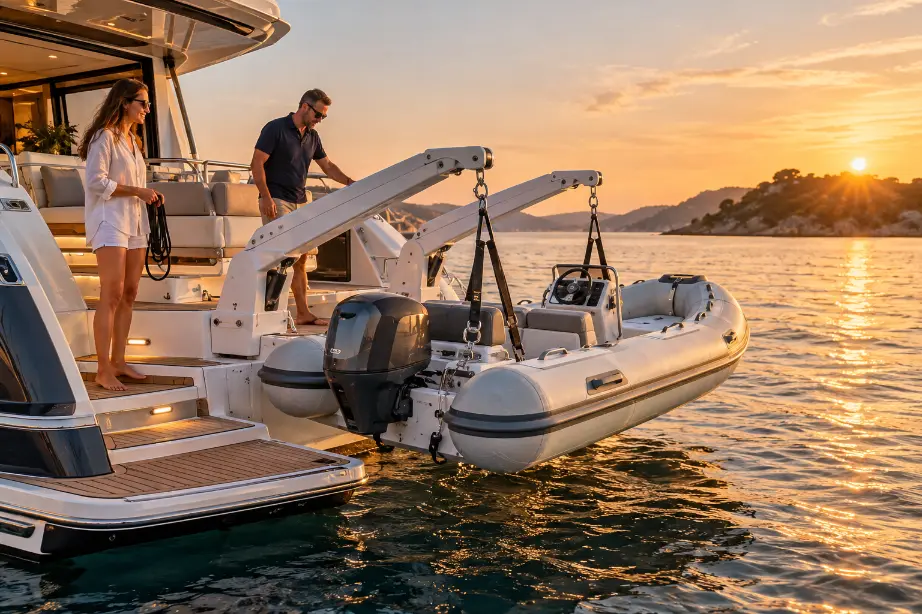
How Much Do Dinghy Davits Cost?
Dinghy davit costs vary based on lifting capacity, materials, mounting design, and operation type. Small snap-style davits may cost a few hundred dollars, while larger powered systems can cost several thousand. The complete project may also include:
- Davit hardware and mounting brackets
- Professional installation and labour
- Electrical work for powered systems
- Swim-platform reinforcement, if needed
- Shipping, taxes, and ongoing maintenance
Comparing only the advertised hardware price can lead to a poor buying decision. A less expensive system may not be suitable for a heavier RIB or a tender with its outboard attached. For a detailed market breakdown, read how much dinghy davits cost.
For current SeaWise pricing, request a quote based on your main vessel, tender, and installation requirements.
Manual vs. Electric Davits: Which Gives Better Value?
Both systems can offer good value when matched to the right boat.
| Feature | Manual Dinghy Davits | Electric Dinghy Davits |
|---|---|---|
| Operation | Hand crank | Powered lifting controls |
| Best suited to | Lighter compatible tenders | Heavier compatible tenders |
| Electrical power | Not needed for lifting | Required for powered operation |
| Physical effort | Some manual input | Less manual lifting effort |
| Installation | Mechanical mounting | Mechanical and electrical work |
| Main advantage | Simplicity | Convenience |
The SeaWise Manual Davit System uses a 25:1 worm-gear mechanism and supports compatible fully loaded tenders weighing up to 450 pounds, subject to approved installation limits. The SeaWise Electric Davit System offers powered operation for heavier tender setups. Its suitable lifting capacity must be confirmed for the selected model and installation.
The better choice is not always the more expensive one. A manual system may meet your needs without adding powered equipment. An electric system may provide greater value if you regularly handle a heavier tender.
When Are Dinghy Davits Not Worth It?
Dinghy davits may not be the best investment for every boater. For example, a small tender used only a few times each season may not justify a complex lifting system. Some owners may prefer a simple storage method or keep the dinghy at the dock.
A davit may also be unsuitable when the main vessel lacks enough structural support or mounting space. Adding weight to the stern can affect trim and vessel handling, so the installation must be assessed carefully. If you have limited swim-platform space, an unusual transom design, or a very heavy tender, get a professional fit assessment before making a decision.
What Should You Check Before Buying Dinghy Davits?
Calculate the Fully Loaded Tender Weight
The dry hull weight is only one part of the lifting load. You must also account for items that stay with the tender during storage. These may include the outboard motor, fuel, battery, console, anchor, and other equipment.
For example, a 200-pound hull with a 100-pound outboard and 45 pounds of fuel and gear has a combined weight of 345 pounds. This is only an example; actual weights must be checked. Use the davit sizing guide to understand what measurements matter.
Check the Swim Platform and Transom
A davit needs suitable mounting points and enough room for the tender to move into storage. Check the swim-platform depth, transom shape, boarding ladder, platform doors, and nearby fittings. The lifting mechanism must not interfere with normal vessel use or create an unsafe obstruction.
The mounting structure must also support the approved loads. This is especially important on older boats or platforms with unknown construction.
Consider Marine Materials and Maintenance
Marine equipment faces moisture, salt, and regular exposure to the weather. Materials and construction quality can affect how much care the system needs. SeaWise uses marine-grade 316L stainless steel in its davit systems. This material offers strong resistance to corrosion, although regular inspection and cleaning are still important.
Read about 316L stainless steel in marine applications before comparing construction materials.
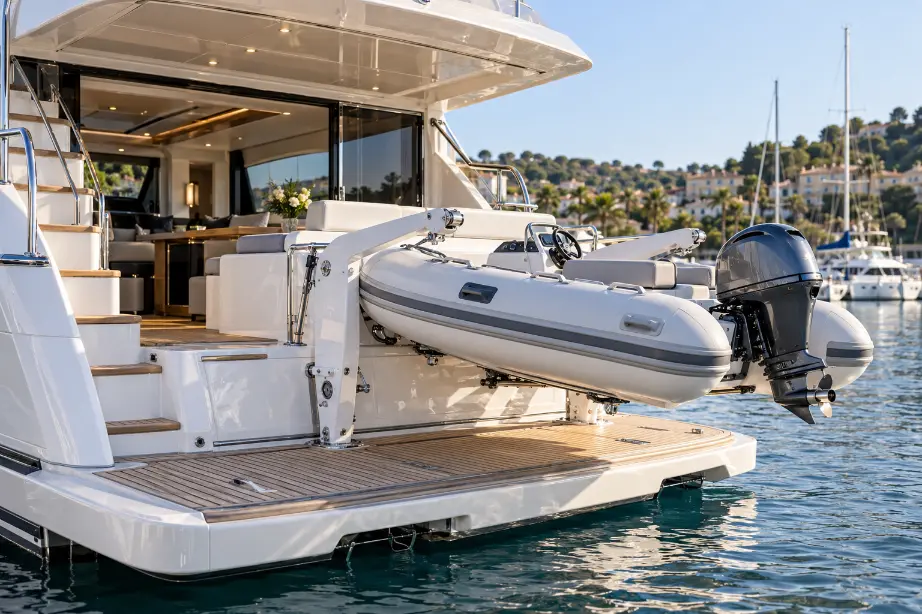
A Simple Way to Decide Whether Davits Are Worth It
Think about your boating habits rather than looking only at the purchase price. Ask yourself how many times you launch your tender each season. Consider whether removing the motor, towing the dinghy, or lifting it manually is causing problems.
Then review three factors: safe fit, total ownership cost, and how much the system will improve your boating routine. A davit that saves effort on every trip may offer strong practical value. A system used only once or twice a year may be harder to justify.
You can also view the SeaWise installation gallery to see how different tender arrangements look on real boats.
Frequently Asked Questions
Are dinghy davits worth it for small boats?
They can be, but only when the boat has suitable mounting space and structural support. Smaller vessels may have tighter weight and clearance limits. The system should be evaluated for the specific boat rather than chosen by size alone.
Do dinghy davits increase the value of a boat?
A well-installed davit system may appeal to buyers who want convenient tender storage. However, it does not guarantee an increase in resale value. Equipment condition, compatibility, and buyer preference all matter.
Can dinghy davits hold a tender with the motor attached?
Yes, certain systems can store compatible tenders with the outboard motor attached. The combined lifting weight must remain within the approved capacity, and the mounting arrangement must meet manufacturer requirements.
Are electric dinghy davits worth the extra cost?
Electric davits may be worthwhile for owners of heavier tenders or those who want to reduce physical effort. Manual davits can be a practical option when the tender is lighter and electrical lifting power is not needed.
How long do dinghy davits last?
Service life depends on construction, installation, load, water conditions, and maintenance. Regular checks for corrosion, loose fittings, cable wear, and other damage can help maintain safe operation. No fixed lifespan applies to every system.
Final Thoughts: Are Dinghy Davits Worth It?
Dinghy davits are worth considering when they solve a regular problem on your boat. They can make tender storage easier, reduce handling effort, and improve access to your dinghy. The best investment is a system that safely supports your fully loaded tender and fits your vessel without creating new problems.
At SeaWise Marine, boat owners can compare manual and electric davits designed for different tender requirements. If you are planning an installation, contact SeaWise Marine with your boat and tender details to explore the right solution.