How to Store a Dinghy with the Outboard Motor Attached
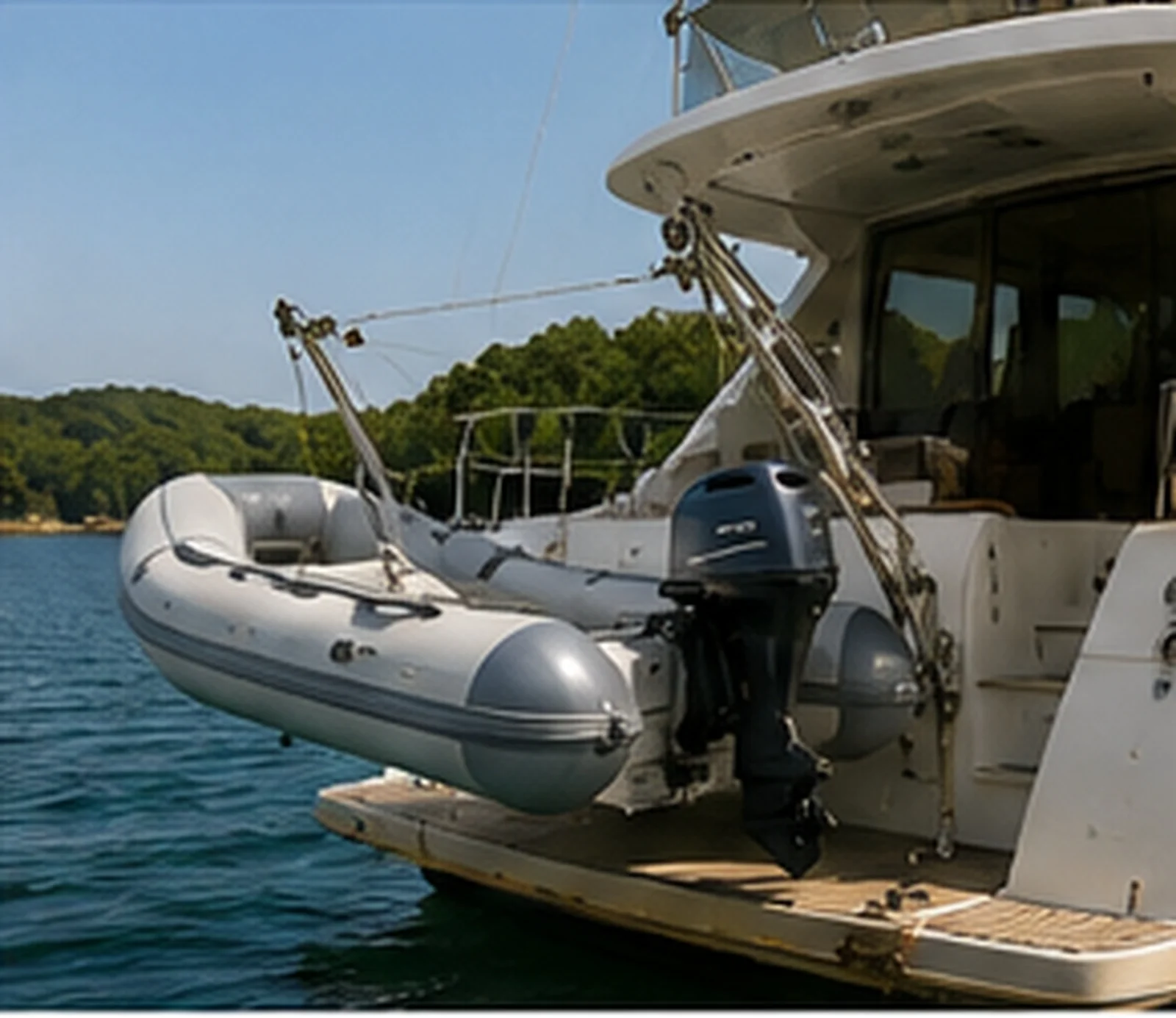
Removing an outboard motor every time you store a dinghy can make tender handling more complicated than necessary. For compatible vessels, dinghy storage with the outboard attached offers an alternative that allows the motor to remain in place during launching, retrieval, and storage.
Instead of repeatedly removing and reinstalling the engine, boat owners can consider a davit system designed to maintain the outboard motor’s orientation throughout the approved lifting process.
At SeaWise Marine, manual and electric boat davit systems are designed to support motor-on tender handling for suitable dinghies and vessel configurations.
This guide explains how motor-on storage works, what weight and clearance considerations matter, and how to determine whether a SeaWise davit system may be appropriate for your boat.
Can You Store a Dinghy with the Outboard Motor Attached?
Yes, a dinghy can be stored with its outboard motor attached when the davit system, tender, outboard, and main vessel are compatible.
Some tender storage arrangements require the outboard to be removed or repositioned. However, systems designed for motor-on storage can accommodate suitable configurations without repeatedly separating the engine from the dinghy.
SeaWise davit systems are designed to automatically maintain the outboard motor’s orientation during compatible lifting and lowering operations.
That capability depends on several factors:
- The fully loaded tender weight.
- Outboard motor size, weight, and position.
- Davit lifting capacity and approved configuration.
- Main vessel mounting structure.
- Available transom and swim-platform clearance.
- Manufacturer-approved installation and operating procedures.
Motor-on storage should never be assumed suitable solely because a davit can lift the tender’s dry hull weight.
Why Do Boat Owners Consider Motor-On Dinghy Storage?
Outboard motors add weight and complexity to tender handling.
Depending on the size of the motor, removing and reinstalling it may require additional equipment or qualified assistance.
Motor-on storage may offer several practical advantages when the installation is suitable.
Less Repeated Outboard Handling
Keeping the outboard attached can reduce the need to remove, transport, and reinstall the motor during normal tender use.
This may simplify routine launching and retrieval, especially for boaters who use their dinghy frequently.
However, the combined weight of the tender and motor must remain within the approved davit limits.
A More Convenient Tender Storage Arrangement
A compatible davit can support a designated tender storage position near the vessel’s transom or swim platform.
The resulting available space depends on the dinghy’s dimensions, mounting arrangement, and the vessel’s design.
Consistent Outboard Orientation
SeaWise systems are designed to maintain the outboard motor’s orientation during compatible tender movement.
This can be useful when the approved installation allows the engine to remain attached.
The outboard manufacturer’s storage and transport requirements must still be followed.
Fewer Separate Handling Tasks
A correctly configured motor-on storage system can reduce some of the separate tasks involved in preparing a dinghy for use.
It does not eliminate the need for safety checks, securing procedures, or equipment maintenance.

How Do SeaWise Davit Systems Support Motor-On Storage?
SeaWise offers manual and electric davit systems for compatible dinghies and tenders.
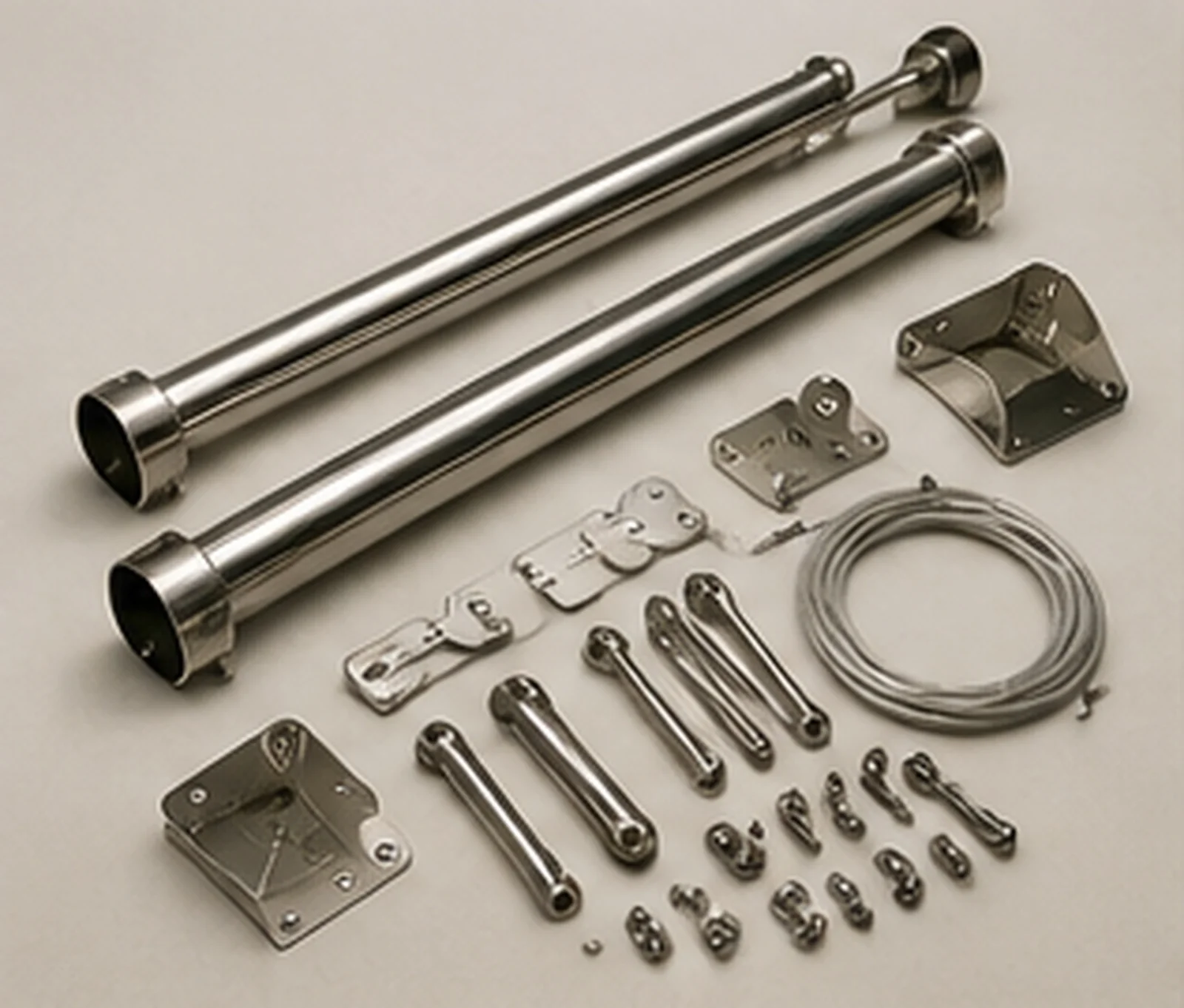
Both configurations use electropolished 316L stainless steel components and are designed to maintain outboard orientation.
The main difference is the lifting method.
Manual Davit System
The SeaWise Manual Davit System uses a geared hand-crank mechanism.
Based on the supplied SeaWise brochure, its features include:
- Lifting capacity up to 450 lbs (204 kg).
- Geared hand-crank operation.
- Automatic maintenance of outboard orientation.
- Electropolished 316L stainless steel construction.
- Operation without electrical lifting power.
- Five-year limited warranty.
The manual system may suit compatible inflatable tenders and lighter RIBs that meet the approved load and installation requirements.
Electric Davit System
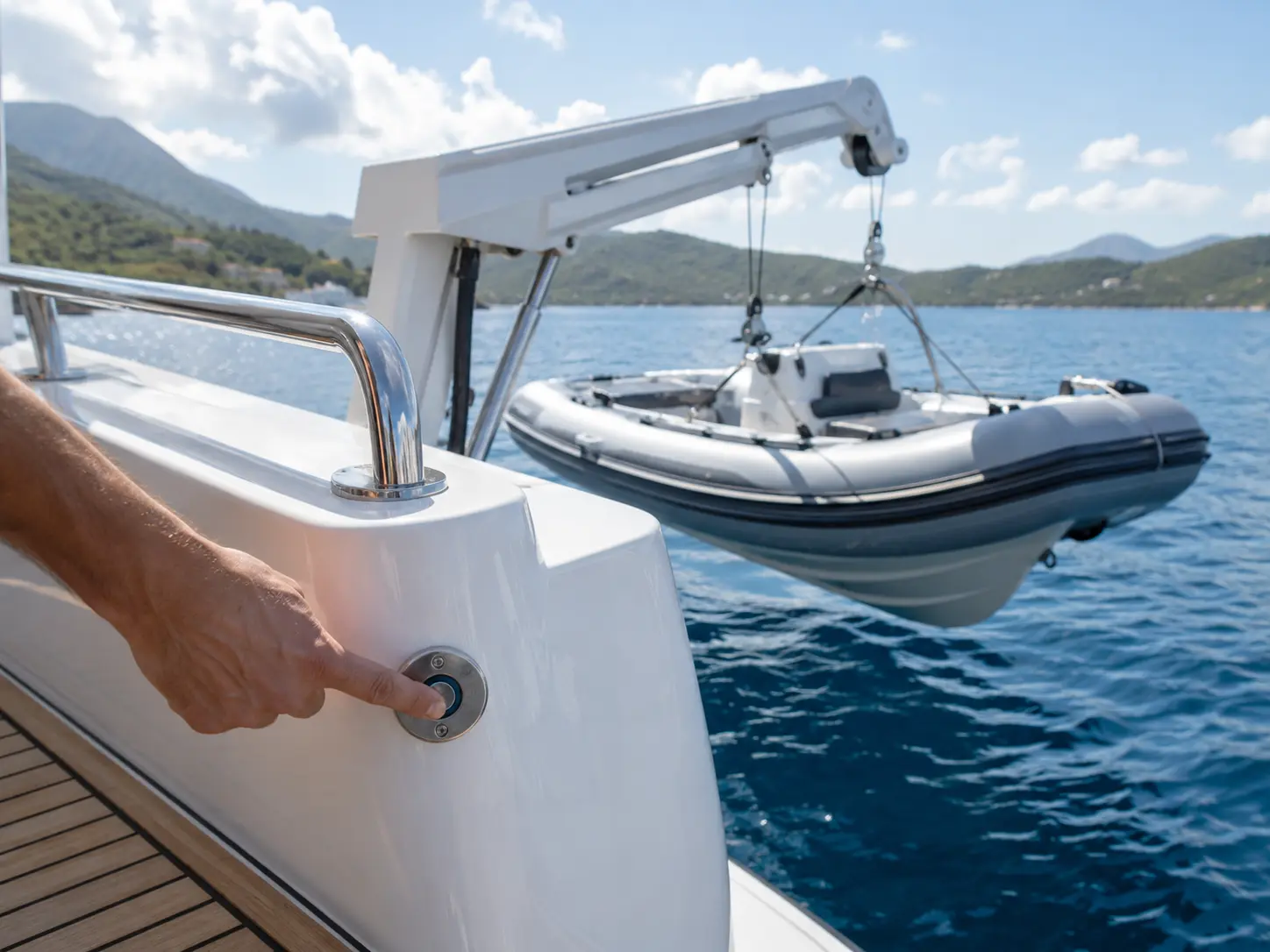
The SeaWise Electric Davit System offers switch-operated launching and retrieval.
Its supplied product specifications include:
- Lifting capacity up to 650 lbs (295 kg).
- Switch-operated lifting.
- Automatic maintenance of outboard orientation.
- Electropolished 316L stainless steel construction.
- An emergency-release feature.
- Five-year limited warranty.
The supported voltage, emergency-release procedure, and operating limits should be confirmed for the specific installed configuration.
An electric system does not automatically accommodate every larger tender. Total weight and vessel compatibility remain essential considerations.
Manual vs Electric Davits for Motor-On Storage
The choice between manual and electric lifting depends on the fully loaded tender, vessel installation, and operating preferences.
| Feature | Manual Davit | Electric Davit |
|---|---|---|
| Lifting capacity | Up to 450 lbs (204 kg) | Up to 650 lbs (295 kg) |
| Operation | Geared hand crank | Switch-operated |
| Outboard orientation | Automatically maintained | Automatically maintained |
| Construction | Electropolished 316L stainless steel | Electropolished 316L stainless steel |
| Electrical lifting power | Not required | Required; verify supported voltage |
| Warranty | Five-year limited | Five-year limited |
These capacities reflect the supplied product brochure and require confirmation for the current model and installation.
For additional comparisons, read Electric vs Manual Davits.

What Weight Should You Calculate Before Choosing a Davit?
The most important weight figure is the fully loaded tender weight, not simply the dinghy manufacturer’s advertised dry weight.
A complete load assessment may include the following:
| Component | What to Check |
|---|---|
| Dinghy hull and tubes | Actual tender weight for the equipped model |
| Outboard motor | Manufacturer-specified motor weight |
| Fuel | Weight of fuel remaining aboard during lifting |
| Battery | Battery and installed electrical equipment |
| Steering and console | Installed controls and accessories |
| Additional equipment | Any items remaining aboard during lifting |
Example: Calculating a Loaded Tender
The following numbers are hypothetical and are provided only to illustrate how additional equipment contributes to lifting weight.
| Example component | Weight |
|---|---|
| Dinghy | 250 lbs |
| Outboard motor | 120 lbs |
| Fuel and battery | 45 lbs |
| Accessories | 20 lbs |
| Total loaded weight | 435 lbs (approximately 197 kg) |
A calculated weight below an advertised davit limit does not, on its own, establish that the configuration is approved or suitable.
Structural loads, mounting geometry, balance, clearances, and manufacturer requirements also need assessment.
For more detailed selection considerations, see How to Determine the Right Boat Davit Size.
What If Your Dinghy and Outboard Exceed the Weight Limit?
Do not exceed the manufacturer’s approved lifting capacity.
The supplied SeaWise specifications list limits of 450 lbs for the manual system and 650 lbs for the electric system.
If the complete loaded tender exceeds the rating for the proposed system, do not assume that different mounting brackets or a higher-rated component will increase the capacity of the complete davit.
Contact SeaWise to determine whether a separately approved configuration or an alternative lifting solution is appropriate.
For heavier tender-selection considerations, explore Dinghy Davits for Heavy RIB Tenders.
Can Motor-On Storage Keep Your Swim Platform Clear?
A properly planned davit installation can create a designated storage position for the dinghy near the stern.
However, it is not accurate to promise that every SeaWise installation will leave the entire swim platform unobstructed.
The available clearance depends on:
- Main vessel transom design.
- Swim-platform dimensions.
- Tender beam and hull shape.
- Outboard motor position.
- Davit mounting configuration.
- Boarding and access requirements.
The correct storage arrangement should be evaluated using the actual vessel and tender dimensions.
For related information, read Best Dinghy Davits for Swim Platforms.
Does Motor-On Storage Reduce Marina or Moorage Costs?
A tender’s storage position can affect the vessel’s overall dimensions, but lower moorage costs are not guaranteed.
Marinas may calculate slip requirements using different methods, including registered length, overall occupied space, overhang, or other local policies.
A compact storage arrangement may be beneficial in some situations, but boat owners should confirm the applicable marina measurements and fees directly.
SeaWise cannot determine moorage savings from the davit system alone.

What Should You Consider Before Installing a Motor-On Davit?
A suitable installation begins with accurate information about the main vessel and tender.
Confirm the Main Vessel’s Mounting Arrangement
Transom and swim-platform construction varies between boats.
The intended mounting location must be assessed for structural suitability and compatibility with the approved davit installation.
Check Clearance Throughout the Operating Range
Adequate clearance is needed for the tender, outboard, vessel structure, and davit components.
An installation that appears suitable when the dinghy is fully stored may still require additional clearance during launching or retrieval.
Follow Outboard Manufacturer Requirements
The outboard’s permitted orientation and handling requirements must be considered alongside the davit system’s operating instructions.
Use Manufacturer-Approved Installation Procedures
Do not assume that every davit installation is suitable for a do-it-yourself project.
Professional installation or structural assessment may be required depending on the vessel and configuration.
Read Can I Install a SeaWise Davit Myself? for further considerations.
Maintaining a Davit Used for Motor-On Storage
A davit system regularly exposed to marine conditions requires appropriate inspection and maintenance.
Electropolished 316L stainless steel offers corrosion resistance, but it is not immune to all forms of corrosion, mechanical wear, or deterioration.
Follow the manufacturer’s maintenance requirements and seek assistance if you observe visible damage, unexpected movement, unusual sounds, or changes in operating resistance.
Do not use a damaged lifting system or attempt unapproved adjustments while the equipment is carrying a load.
For additional guidance, see Boat Davit System Maintenance.
How to Choose a Motor-On Dinghy Storage System
Before requesting a recommendation, gather the relevant vessel and tender information.
| Information | Why It Matters |
|---|---|
| Main vessel make, model and year | Helps assess installation compatibility |
| Dinghy make and model | Identifies hull dimensions and layout |
| Outboard model and weight | Helps determine loaded weight and clearance |
| Fuel and installed accessories | Contributes to total lifting load |
| Transom and platform dimensions | Supports mounting and clearance assessment |
| Preferred lifting method | Helps compare manual and electric systems |
With these details, SeaWise can review whether the available systems may suit the proposed arrangement.
You can explore the SeaWise Manual and Electric Davit Systems before requesting a quote.
Frequently Asked Questions
Can I leave the outboard motor attached when storing my dinghy?
Yes, when the davit, tender, outboard and main vessel are compatible with the approved installation requirements. SeaWise systems are designed to maintain outboard orientation during suitable operations.
Do I need to remove the outboard before every dinghy launch?
Not necessarily. A compatible motor-on storage system may allow routine launching and retrieval with the engine attached.
How much can the SeaWise manual davit lift?
The supplied product brochure lists up to 450 lbs (204 kg), subject to the approved configuration and installation requirements.
How much can the SeaWise electric davit lift?
The supplied product brochure lists up to 650 lbs (295 kg). Confirm the current model’s complete operating requirements before selection.
Can an outboard remain attached to a heavy RIB?
Possibly, but the fully loaded RIB must meet the approved lifting capacity, installation, and clearance requirements. Outboard orientation alone does not establish suitability.
Does motor-on storage eliminate all outboard handling?
No. Certain maintenance, servicing, winterization, or transport situations may still require the outboard to be handled separately according to its manufacturer’s instructions.
Will a SeaWise davit fit my boat?
Compatibility depends on your vessel’s structure, dimensions, tender configuration, and the intended installation. SeaWise should review these details before confirming suitability.
Explore Motor-On Dinghy Storage with SeaWise Marine
If you’re looking for a practical alternative to repeatedly removing your dinghy’s outboard motor, SeaWise Marine can help you assess your tender and vessel configuration.
The team offers manual and electric davit systems for compatible applications and can discuss the information needed for a suitable installation.
Review actual SeaWise davit installation examples or request a vessel-specific assessment.
Phone: 604-946-0551
Email: derek@seawisemarine.com