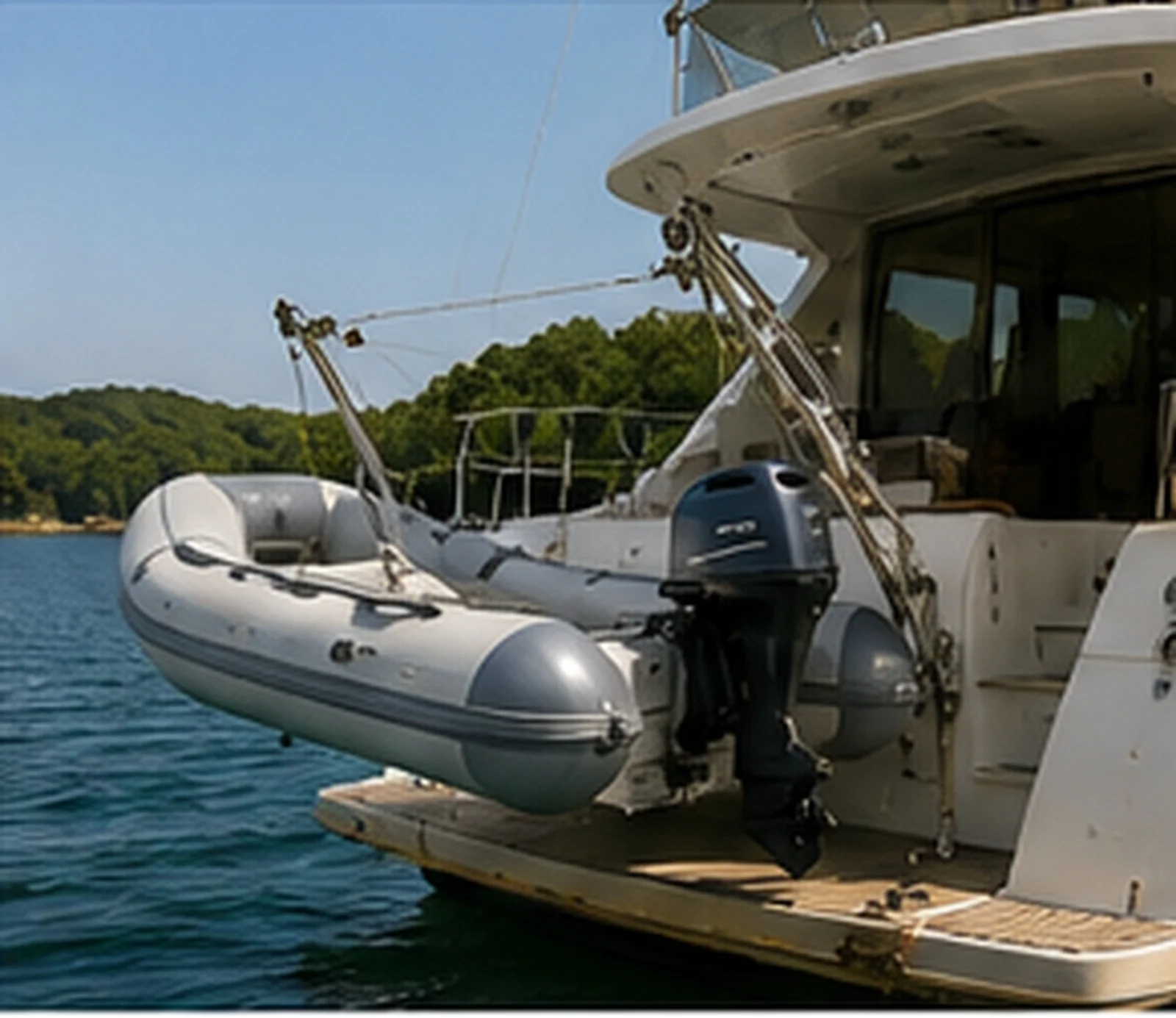
Choosing the best dinghy davits for heavy RIB tenders starts with one important question: Can the davit system safely support the fully loaded tender on your specific vessel?
Rigid inflatable boats (RIBs) are popular because they combine an inflatable collar with a rigid hull, providing a practical tender option for many cruising boats. However, fiberglass or aluminum hulls, larger outboard motors, center consoles, fuel, and onboard equipment can significantly increase the weight that a davit must handle.
At SeaWise Marine, manual and electric davit systems are designed for compatible dinghies and tenders, including certain RIB configurations.
This guide explains how to evaluate heavy RIB weight, compare lifting options, consider mounting requirements, and determine when a tender may exceed a system’s rated capacity.
What Is the Best Davit System for a Heavy RIB?
The best davit system for a heavy RIB is one with an approved lifting capacity, mounting arrangement, and operating method suited to the fully loaded tender and the main vessel.
An electric davit can be a practical choice for compatible RIBs when powered lifting is preferred. However, electric operation alone does not establish sufficient lifting capacity or structural suitability.
SeaWise’s supplied product specifications identify the following limits:
| SeaWise Davit System | Published Lifting Capacity | Operating Method |
|---|---|---|
| Manual Davit | Up to 450 lbs (204 kg) | Geared hand crank |
| Electric Davit | Up to 650 lbs (295 kg) | Switch-operated |
These figures describe the supplied product specifications and should be confirmed for the current model and installation.
Important: A fully loaded RIB exceeding 650 lbs (295 kg) should not be assumed compatible with either of these listed SeaWise systems. Contact the manufacturer about appropriate alternatives rather than exceeding the stated rating.
Why Do Heavy RIB Tenders Need Careful Davit Selection?
Compared with smaller lightweight inflatable tenders, some RIBs carry substantial weight in their hull, steering console, outboard motor, and accessories.
That weight affects more than the lifting mechanism.
Fully Loaded Tender Weight
The weight of the RIB during lifting may differ considerably from the manufacturer’s published dry weight.
Items to account for include:
- Rigid hull and inflatable tubes.
- Outboard motor and attached equipment.
- Fuel and fuel containers.
- Battery and electrical accessories.
- Steering console and installed hardware.
- Equipment or other items remaining aboard during lifting.
Do not rely solely on the boat manufacturer’s dry-weight specification.
Our guide on determining the right davit size provides additional considerations for estimating loaded tender weight.
Weight Distribution and Mounting Loads
The tender’s total weight is important, but so are its dimensions and how the load transfers through the davit into the main vessel.
Transom design, platform construction, mounting geometry, and structural capacity affect suitability.
An installation that works for one boat should not automatically be assumed suitable for another, even if the tenders weigh the same.
Outboard Motor and Tender Clearance
The position of the outboard motor can affect the space required for launching, lifting, and storing the RIB.
Before selecting a system, confirm that the outboard, hull, tubes, and mounted equipment have adequate clearance throughout the intended operating range.
Manual vs Electric Davits for Heavy RIB Tenders
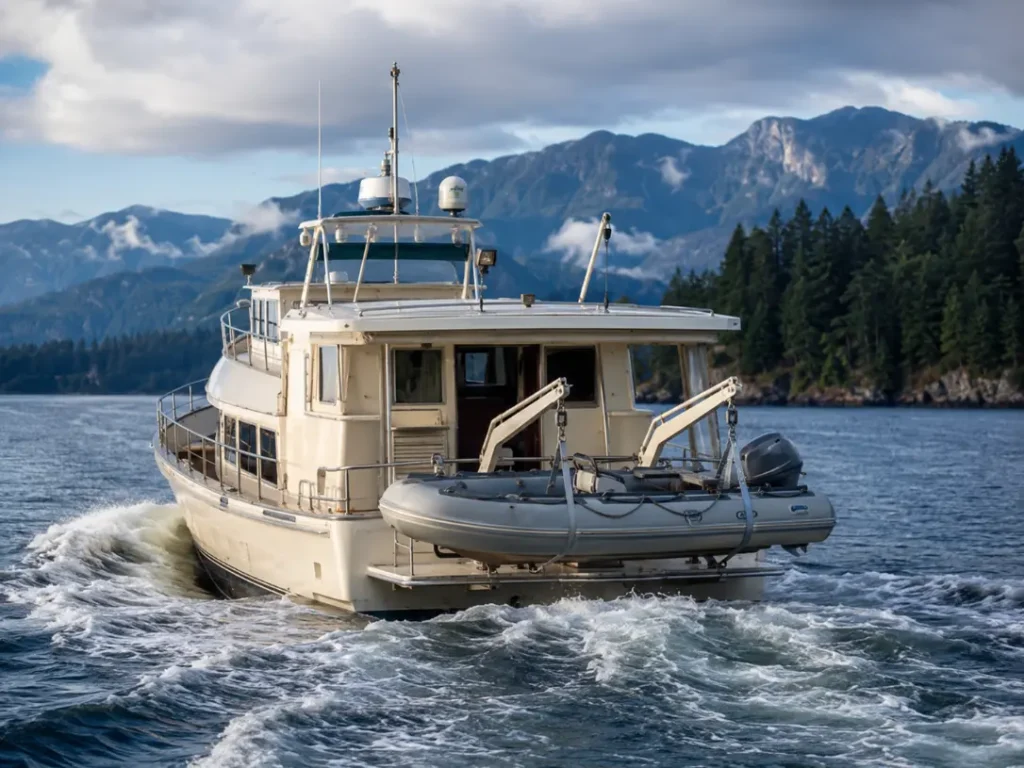
Both manual and electric davits may be suitable for certain RIBs. The selection depends on the tender’s loaded weight and the vessel’s installation requirements.
Manual Davit Systems
The SeaWise Manual Davit System uses a geared hand-crank mechanism and does not require electrical power for lifting. It may be considered for compatible RIBs within its published capacity of up to 450 lbs (204 kg).
Its design includes automatic maintenance of the outboard motor’s orientation during compatible lifting operations.
Manual operation still requires following the approved procedures, keeping equipment maintained, and ensuring the installation is appropriate for the load.
Electric Davit Systems
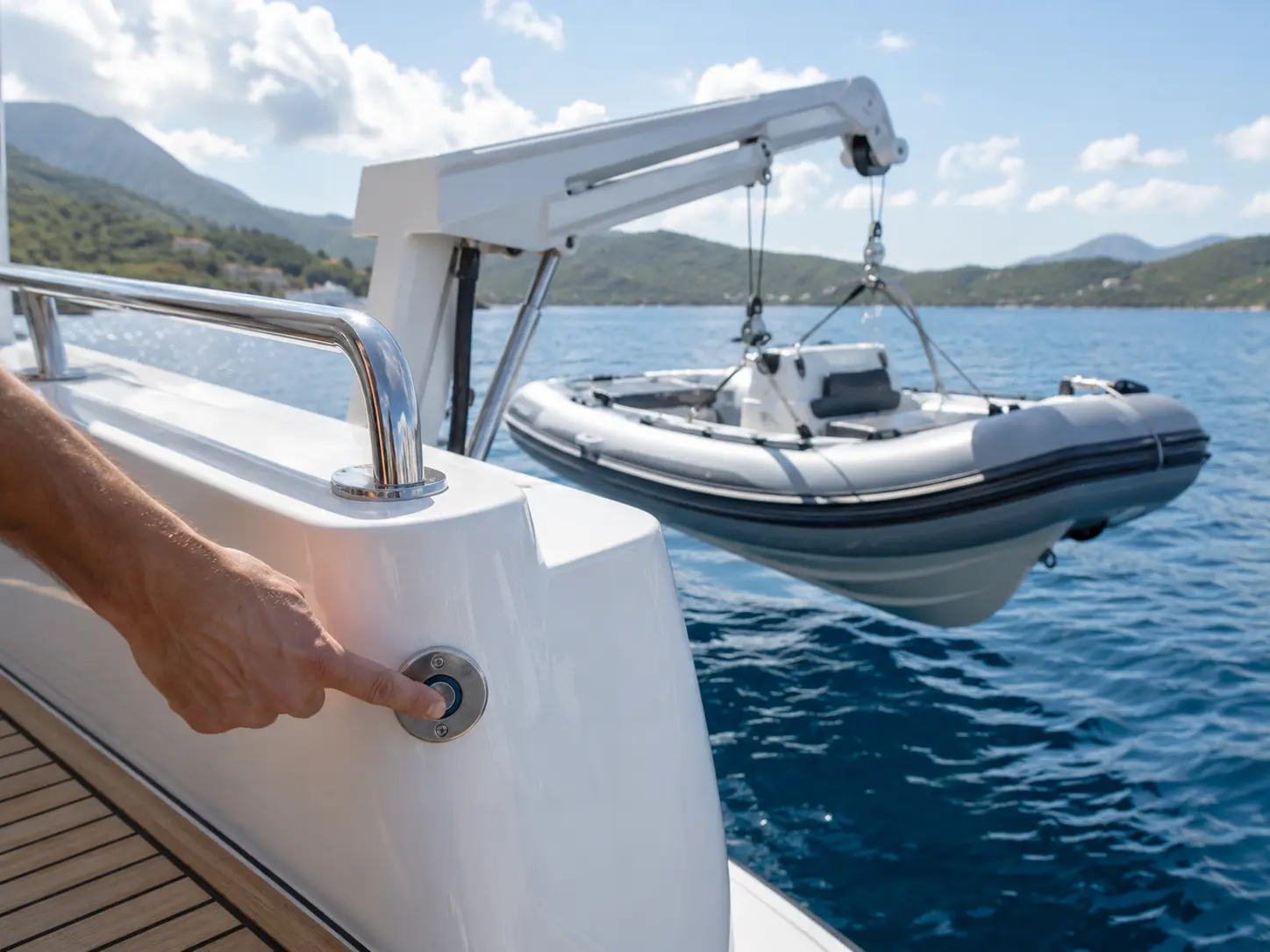
The SeaWise Electric Davit System offers switch-operated lifting for compatible tenders up to the published limit of 650 lbs (295 kg). Powered lifting can reduce the need for manual cranking, making it an option for boaters who prefer electrically operated tender handling.
The supplied electric system information identifies an emergency-release feature, although its procedures and limitations must be confirmed using the current operating instructions.
A higher capacity does not mean every heavy RIB is suitable. The fully loaded tender must still satisfy all applicable configuration and installation requirements.
For a broader comparison, read Electric vs Manual Davits.
Can a SeaWise Electric Davit Lift a 700 lb RIB?
Not within the supplied electric system’s stated 650 lb (295 kg) lifting capacity.
A 700 lb tender exceeds that published limit.
Boat owners should not assume that an electric winch component rating, a reinforced mounting arrangement, or a different power supply increases the approved lifting capacity.
Any alternative model or configuration must have its own manufacturer-approved specifications.
If your RIB exceeds the applicable SeaWise rating, contact the team to discuss suitability and other options. Do not attempt to operate a system beyond its approved limits.
Why Motor-On Dinghy Storage Matters
Removing and reinstalling a heavy outboard motor can complicate routine tender handling.
SeaWise davit systems are designed to maintain outboard orientation while launching and retrieving compatible dinghies.
For suitable installations, this may allow the outboard to remain attached during handling, reducing the need to remove it for routine storage.
However, motor-on compatibility depends on the combined tender and outboard weight, mounting geometry, clearance, and approved system configuration.
The presence of an outboard motor should always be included when assessing the fully loaded tender.
Learn more about motor-on dinghy storage considerations.
Choosing Davits for Swim Platforms and Trawlers
Heavy RIB installation requirements may vary depending on the main vessel.
Swim Platform Installations
A swim platform may provide an accessible tender storage location, but its suitability depends on more than available space.
The platform and supporting structure must be assessed for the intended installation and load.
Consider the tender’s stored position, movement during lifting, outboard clearance, and the platform’s structural design.
See our guide to dinghy davits for swim platforms.
Trawlers and Cruising Boats
Trawlers and larger cruising vessels may offer different mounting arrangements depending on their stern design, swim platform, and available access.
An installation should account for vessel-specific dimensions, structural capacity, and tender operating requirements rather than relying on vessel category alone.
Explore dinghy davit considerations for trawlers.
Is 316L Stainless Steel Suitable for Heavy RIB Davits?
Material selection is important for equipment regularly exposed to marine conditions.
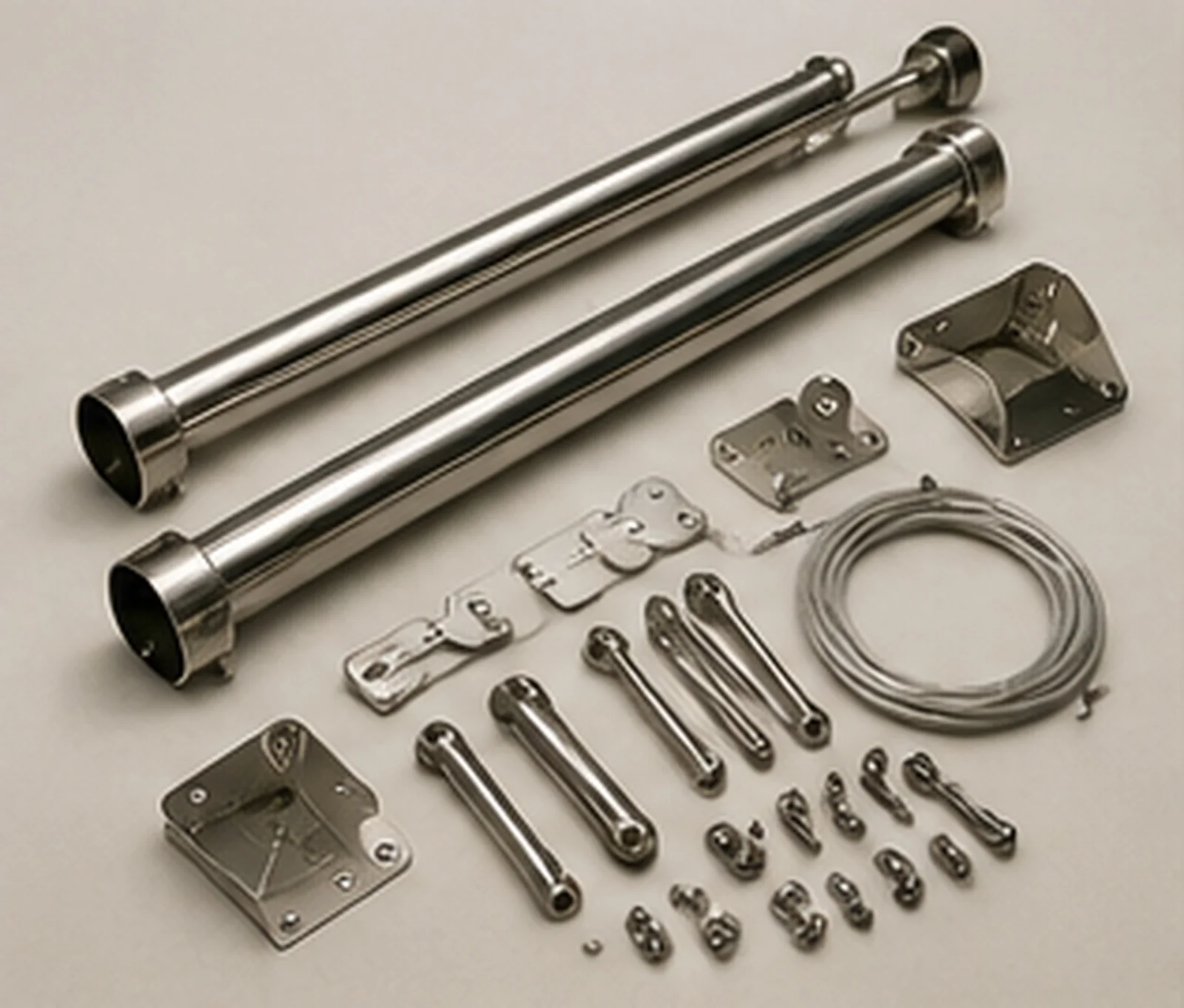
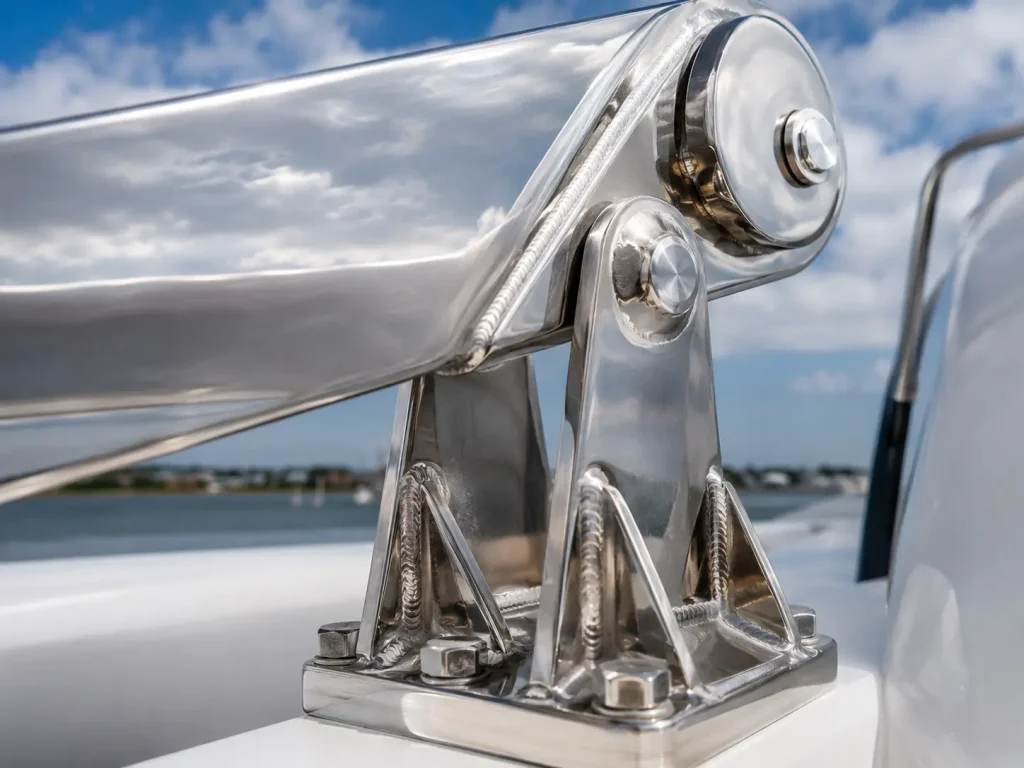
SeaWise’s supplied product information identifies electropolished 316L stainless steel as the construction material used in its manual and electric davit systems.
316L stainless steel is valued for corrosion resistance, particularly in marine applications, but it is not immune to corrosion or deterioration.
Material grade alone also does not establish the safe lifting capacity of a complete davit installation.
Engineering design, component specifications, installation, and maintenance all influence system suitability.
For more information about the material, see 316L stainless steel in marine applications.
Should You Install a Heavy RIB Davit Yourself?
A davit installation can involve mounting alignment, load transfer, structural considerations, and model-specific assembly procedures.
For a heavier RIB, assessing the main vessel’s structure is especially important.
Before installation, confirm:
- The fully loaded tender’s weight and dimensions.
- The approved davit system and configuration.
- Available mounting positions and clearances.
- Structural suitability of the intended mounting area.
- Manufacturer-approved installation requirements.
- Whether qualified professional installation or structural assessment is needed.
Do not assume that the presence of a swim platform means it can safely support any chosen davit installation.
Our article on installing a SeaWise davit yourself discusses additional installation considerations.
Maintaining Davits Used with Heavy RIBs
Regular inspection and appropriate maintenance help identify conditions that may affect equipment operation.
Follow the manufacturer-approved maintenance schedule rather than relying on a universal inspection interval.
Potential areas for inspection include mounting connections, lifting components, visible wear, corrosion, and unusual operating behaviour.
If the system becomes difficult to operate, produces unexpected noises, or shows visible damage, stop and consult the manufacturer’s instructions or an appropriately qualified technician.
Do not force a jammed mechanism or attempt unapproved repairs.
Read the Boat Davit System Maintenance Guide for related maintenance considerations.
How to Choose a Davit for Your Heavy RIB
Before contacting a manufacturer or installer, prepare a clear summary of the tender and main vessel.
| Information Needed | Why It Matters |
|---|---|
| RIB make, model and year | Identifies the tender configuration |
| Fully loaded RIB weight | Establishes the lifting load |
| Outboard make and weight | Helps evaluate total weight and clearance |
| Main vessel make and model | Supports vessel-specific compatibility review |
| Swim platform or transom dimensions | Helps assess available mounting space |
| Preferred operation | Helps compare manual and electric systems |
| Intended installation location | Supports planning for structural and clearance requirements |
Providing these details early can make the product-selection process more useful.
You can also review the general SeaWise davit system comparison to understand the two available lifting options.
Frequently Asked Questions
What is considered a heavy RIB tender?
There is no single universal weight threshold defining every heavy RIB. Suitability should be evaluated using the fully loaded weight, dimensions, outboard arrangement, and lifting system specifications.
What is the maximum weight a SeaWise electric davit can lift?
The supplied product information lists a capacity of up to 650 lbs (295 kg) for the electric system. Confirm the current model rating and operating conditions directly with SeaWise.
Can a manual davit handle a RIB tender?
Yes, a compatible RIB may be suitable for the SeaWise manual system if the complete installation meets the manufacturer’s requirements and the fully loaded tender remains within the published 450 lb (204 kg) limit.
Can the outboard stay attached when lifting a heavy RIB?
SeaWise systems are designed to maintain outboard orientation, but whether the motor can remain attached depends on the loaded tender weight, clearances, and approved configuration.
Does an electric davit eliminate the need for manual handling precautions?
No. Electric operation changes how the lifting mechanism is controlled but does not eliminate equipment inspection, clearance checks, load limits, or the need to follow approved procedures.
Are heavier RIBs always better suited to electric davits?
Not necessarily. The appropriate system depends on the actual load, vessel compatibility, and manufacturer-approved specifications. A tender exceeding an electric system’s capacity requires a different approved solution.
Get Help Selecting a Davit for Your Heavy RIB
Selecting a davit for a heavier tender requires more than comparing advertised lifting capacities.
SeaWise Marine can help review your main vessel, RIB specifications, outboard weight, and intended installation arrangement to determine whether one of its systems may be suitable.
Explore the SeaWise installation gallery for examples of davit installations and contact the team to discuss your own vessel.
Phone: 604-946-0551