Marine safety regulations help protect boat operators, passengers, workers, and the marine environment. Whether you own a recreational vessel or operate a commercial boat, understanding applicable safety requirements is an important part of responsible boating.
In Canada, recreational boating requirements differ from maritime occupational health and safety regulations. The rules that apply depend on the vessel’s classification, operating location, and intended use.
For boaters exploring safer and more convenient tender handling options, SeaWise Marine offers manual and electric boat davit systems designed for compatible dinghies and vessel configurations.

What Are Marine Safety Regulations in Canada?
Canadian marine safety requirements cover a range of activities, including recreational boating, commercial vessel operations, operator competency, and workplace safety.
Recreational Boating Safety
Transport Canada administers federal recreational boating safety requirements, including rules related to operator competency, safety equipment, and vessel operation.
These requirements vary depending on factors such as vessel type and length, propulsion, and operating conditions.
Maritime Occupational Health and Safety
Canada’s Maritime Occupational Health and Safety Regulations apply within defined employment settings. They address workplace safety obligations and should not be confused with the requirements applicable to every privately operated recreational vessel.
Commercial Vessel Safety Management
Canada’s Marine Safety Management System Regulations establish requirements for covered marine operations. Applicability depends on the vessel and relevant regulatory provisions.
Boat owners and operators should consult official regulatory guidance to determine which rules apply.
Why Safe Dinghy Handling Matters
Launching, retrieving, and storing a dinghy involves moving equipment near the vessel, passengers, and surrounding water.
Potential risks include:
- Exceeding the rated lifting capacity of the davit system.
- Incorrectly estimating the fully loaded tender weight.
- Using equipment with damaged or worn components.
- Inadequate mounting or structural support.
- Operating equipment without sufficient clearance.
- Failing to follow approved operating procedures.
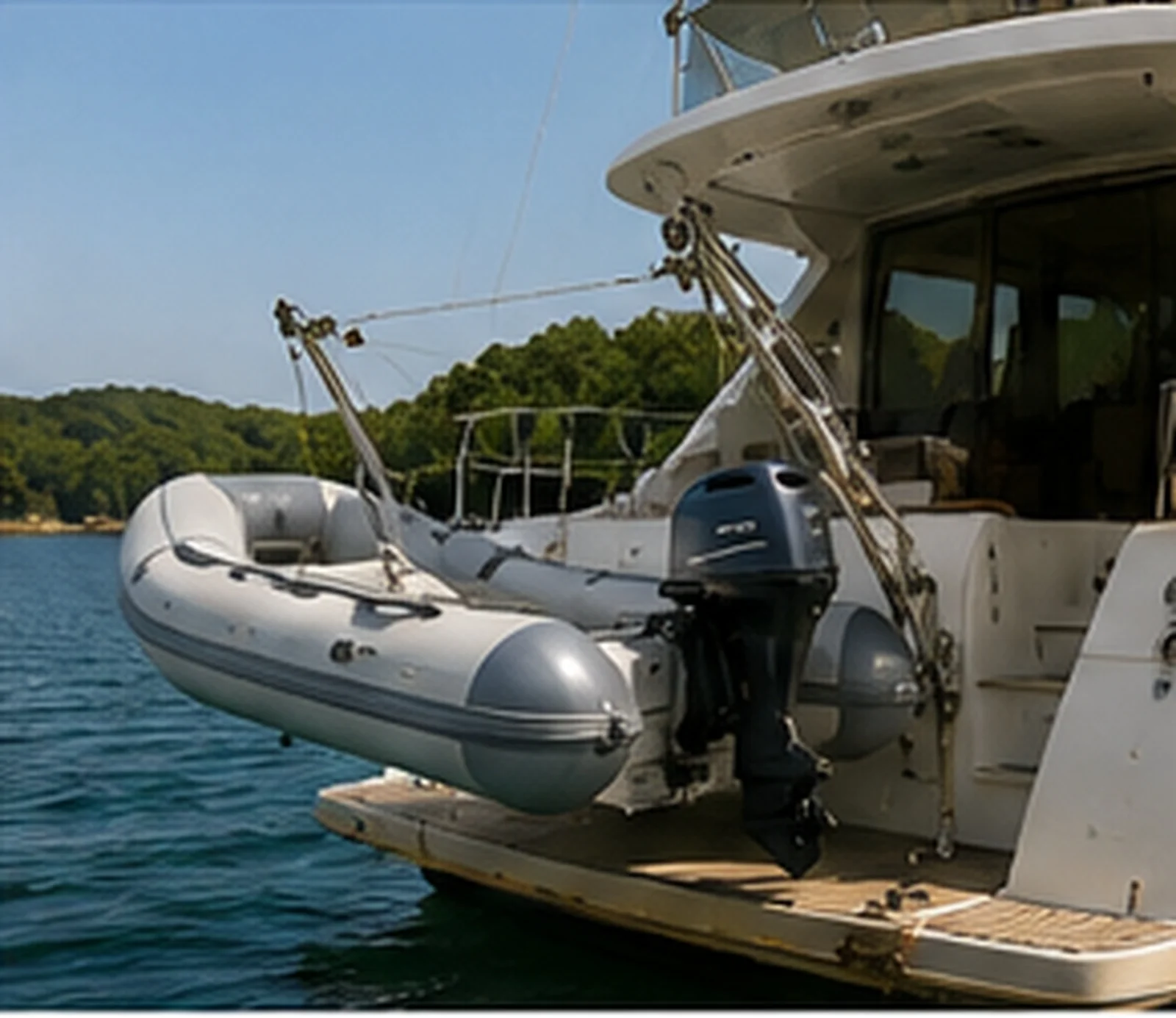
A properly selected davit system can help boaters handle compatible tenders through a defined lifting and storage process.
For a general overview of the available configurations, explore SeaWise manual and electric davit systems.

Understanding Boat Davit Lifting Capacity
One of the most important considerations when selecting a davit system is the fully loaded weight of the tender.
This may include the dinghy, outboard motor, fuel, batteries, installed equipment, and any accessories remaining aboard during lifting.
According to the SeaWise product specifications supplied for this article:
| Davit System | Published Lifting Capacity |
|---|---|
| Manual Davit System | Up to 450 lbs (204 kg) |
| Electric Davit System | Up to 650 lbs (295 kg) |
These published capacities do not, by themselves, establish suitability for a particular installation. The approved model configuration, mounting arrangement, structural support, and tender characteristics must also be considered.
For additional guidance, see how to determine the right boat davit size.
Choosing the Right Davit System for Your Vessel
Manual and electric davit systems provide different methods of launching and retrieving a compatible tender.
Manual Davit Systems
The SeaWise Manual Davit System uses a geared hand-crank mechanism, allowing operation without electrical lifting power.
It is intended for compatible tenders within its approved lifting capacity and installation requirements.
Learn more about the SeaWise Manual Davit System.
Electric Davit Systems
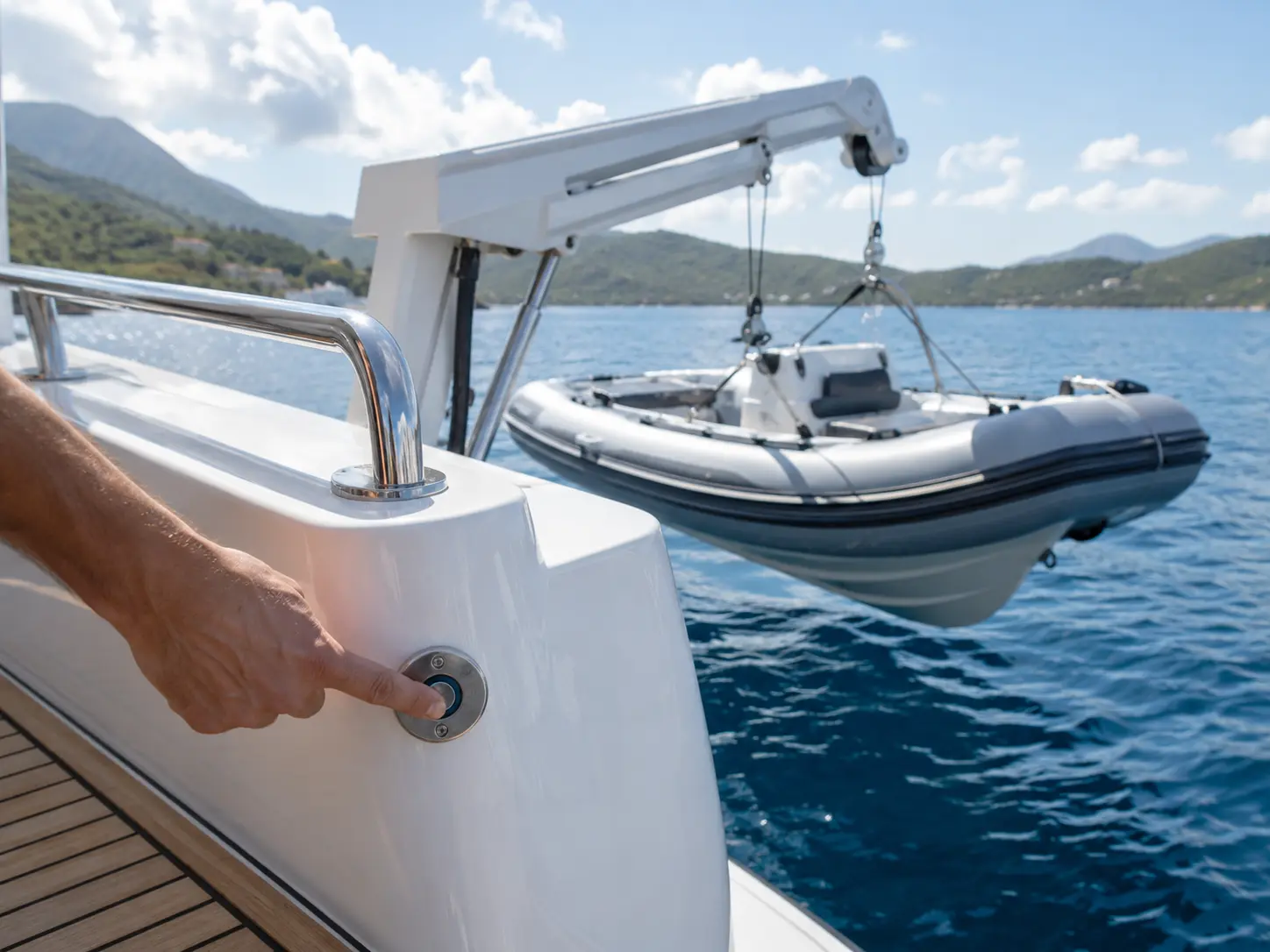
The SeaWise Electric Davit System provides switch-operated lifting and includes an emergency-release feature described in the supplied product brochure.
Its powered operation may suit boaters who prefer an alternative to manual cranking, provided the vessel and fully loaded tender meet the applicable specifications.
Explore the SeaWise Electric Davit System for product-specific information.

Manual vs Electric: Which Is Appropriate?
The choice should consider loaded tender weight, available mounting space, operating preferences, power requirements, and vessel compatibility.
For a more detailed comparison, read Electric vs Manual Davits.
Safe Practices for Launching and Retrieving a Dinghy
Safe operation begins with the instructions approved for the specific davit model and installation.
Before operating a davit system:
- Verify that the fully loaded tender is within the approved capacity.
- Check accessible components for visible damage or unusual wear.
- Ensure the lifting and lowering area is clear of people and obstructions.
- Follow the manufacturer’s approved operating and securing procedures.
- Stop operation if the equipment behaves unexpectedly.
Do not exceed rated loads, bypass safety features, or attempt improvised repairs.
For general considerations about launching, see How to Launch a Dinghy in Seconds. Any operating procedures should be verified against the current manufacturer instructions before use.
Maintaining Your Boat Davit System
Regular inspection and appropriate maintenance are important parts of equipment ownership.
Maintenance requirements depend on the system, operating environment, and manufacturer’s instructions.
Areas that may require attention include mounting connections, accessible mechanical components, visible wear, unusual operation, and evidence of corrosion.
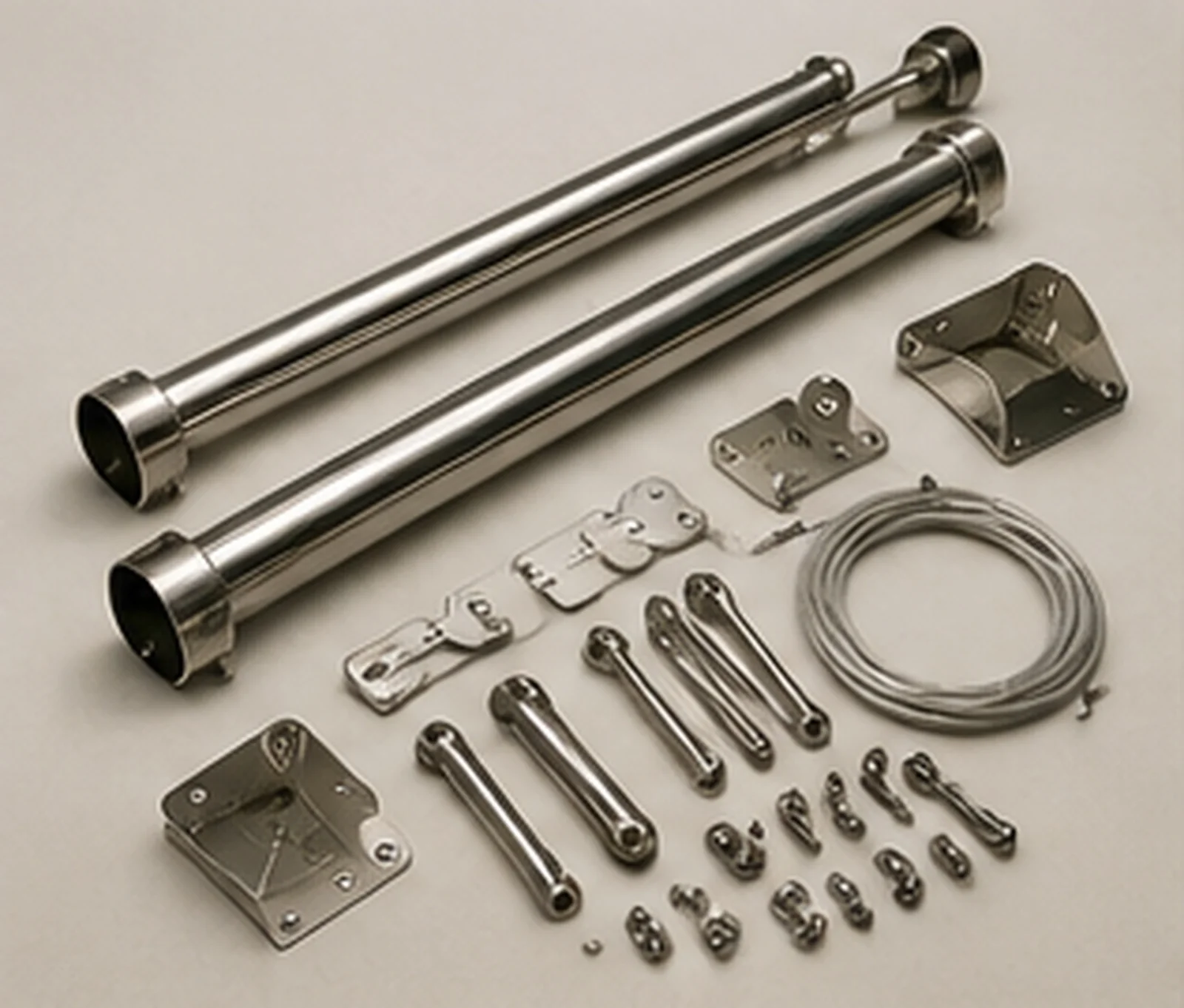
SeaWise systems use electropolished 316L stainless steel components. This material provides corrosion resistance in marine environments, but it does not make the equipment maintenance-free or immune to deterioration.
Read the Boat Davit System Maintenance Guide for additional maintenance considerations.
Does Installing a Davit System Ensure Regulatory Compliance?
No. Installing a davit system does not automatically establish compliance with marine safety legislation or guarantee safe vessel operation.
Compliance depends on applicable laws, vessel classification, required equipment, installation conditions, and operational practices.
A davit system should be assessed as part of the vessel’s overall equipment and handling arrangements.
Commercial marine operators may need additional workplace safety procedures, documentation, and professional assessments depending on the applicable regulatory framework.
Official Canadian Marine Safety Resources
For authoritative information, consult current government guidance and legislation:
- Transport Canada — Recreational Boating Safety
- Government of Canada — Maritime Occupational Health and Safety Regulations
- Transport Canada — Marine Safety Management Systems
Additional requirements may apply based on jurisdiction, operating location, vessel classification, or commercial activity.
Frequently Asked Questions
Do marine occupational health and safety regulations apply to recreational boats?
Not automatically. Canada’s maritime occupational health and safety regulations have a defined employment-related scope. Recreational vessel owners must identify the boating safety requirements applicable to their vessels and operations.
What is the lifting capacity of SeaWise davit systems?
The supplied SeaWise product information lists up to 450 lbs (204 kg) for the manual system and up to 650 lbs (295 kg) for the electric system. Actual suitability requires confirmation of the approved configuration and installation requirements.
Can a dinghy remain attached to its outboard motor when using a SeaWise davit?
SeaWise systems are designed to maintain outboard orientation during compatible tender handling. Suitability depends on the loaded tender weight, approved system configuration, and vessel compatibility.
How often should a boat davit system be inspected?
Follow the inspection and maintenance schedule specified in the manufacturer-approved documentation. Usage, operating conditions, and signs of wear may require additional attention.
Does a davit system make a boat compliant with marine safety regulations?
No. Regulatory compliance depends on the requirements applicable to the vessel and its operation, not simply the installation of lifting equipment.
Get Help Selecting a SeaWise Davit System
Choosing an appropriate davit system begins with understanding your vessel, tender weight, and installation requirements. SeaWise Marine offers manual and electric davit systems for compatible dinghies and tenders.
Contact the team to discuss your vessel specifications and available configurations.