Launching a dinghy should be a controlled, familiar process—not something a boat owner attempts for the first time under difficult conditions. The time required depends on the tender, davit design, vessel configuration, weather, and operator experience.
A compatible davit system can make routine tender handling more convenient by supporting the dinghy during lifting and lowering. However, safe operation always depends on using the equipment within its approved limits and following the manufacturer’s instructions.
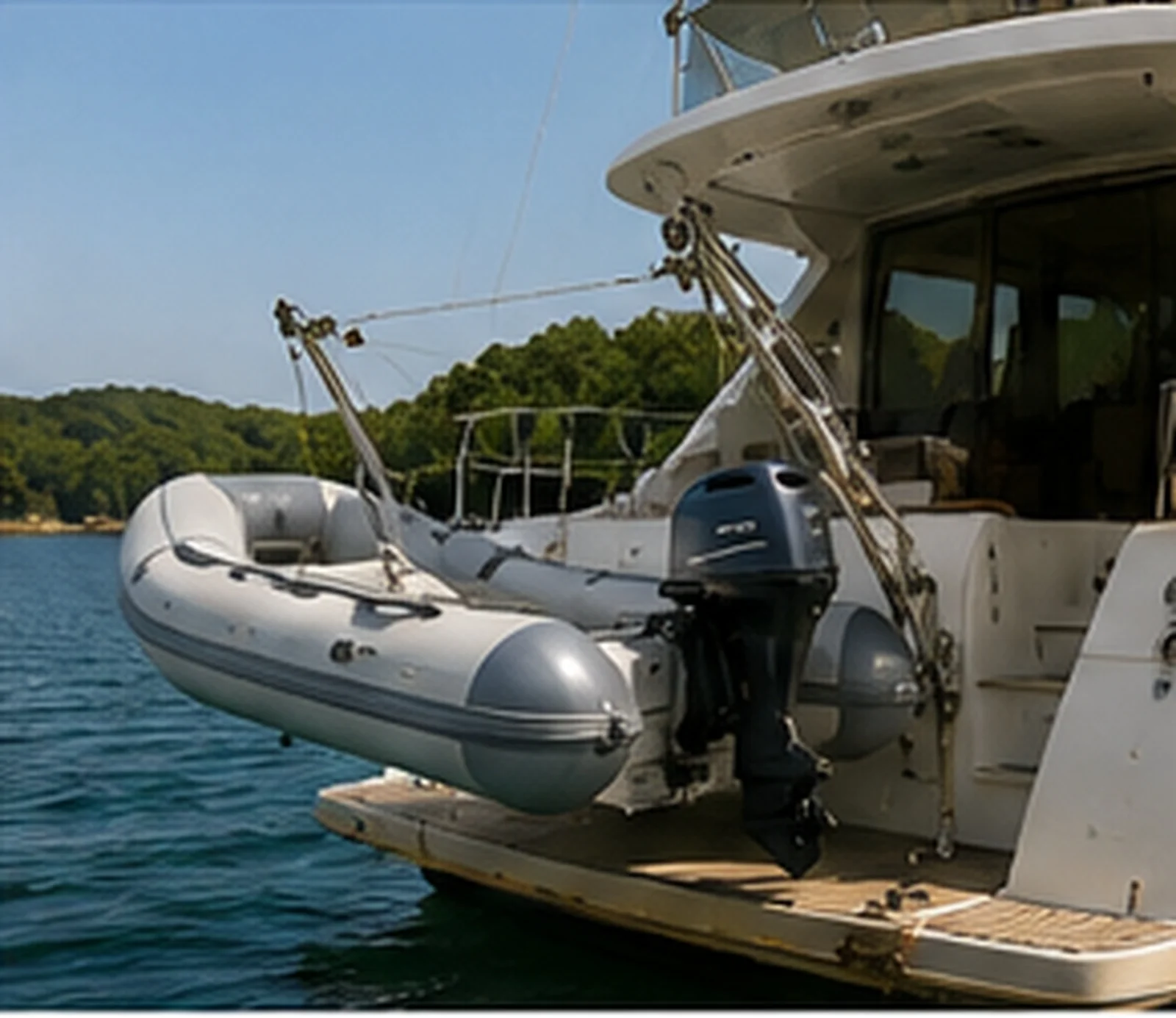
At SeaWise Marine, manual and electric boat davit systems are designed to help boaters launch, retrieve, and store compatible dinghies while maintaining the outboard motor’s orientation.
This guide explains what to consider before launching, how different davit systems operate, and why safe preparation matters more than achieving a particular launch time.
Why Dinghy Launching Requires Careful Preparation
A dinghy may be relatively small compared with the main vessel, but it still represents a substantial load when combined with its outboard motor, fuel, batteries, and accessories.
An unsuitable lifting arrangement or poor operating conditions can increase the risk of equipment damage or injury.
Important considerations include:
- Loaded tender weight: The entire suspended load must remain within the approved system capacity.
- Mounting compatibility: The davit and vessel must have appropriate structural support and clearance.
- Operating conditions: Vessel movement, wind, waves, and surrounding traffic can affect tender handling.
- Equipment condition: Worn, damaged, or improperly maintained components require attention.
- Operator readiness: Users should understand the relevant controls and instructions before operating the system.
For a broader discussion of operational obligations and relevant Canadian requirements, read our marine safety regulations guide.
How Does a Dinghy Davit System Help with Launching?
A davit system provides a mechanism for lifting and lowering a compatible tender from its installed storage position.
Depending on the system, operation may involve a geared hand crank or powered controls.
SeaWise offers two main configurations: manual and electric.
Manual Davit System
The SeaWise Manual Davit System uses a geared hand-crank mechanism to raise and lower compatible tenders without electrical lifting power.
According to the supplied product information, it offers:
- Lifting capacity up to 450 lbs (204 kg).
- Geared hand-crank operation.
- Automatic maintenance of outboard orientation.
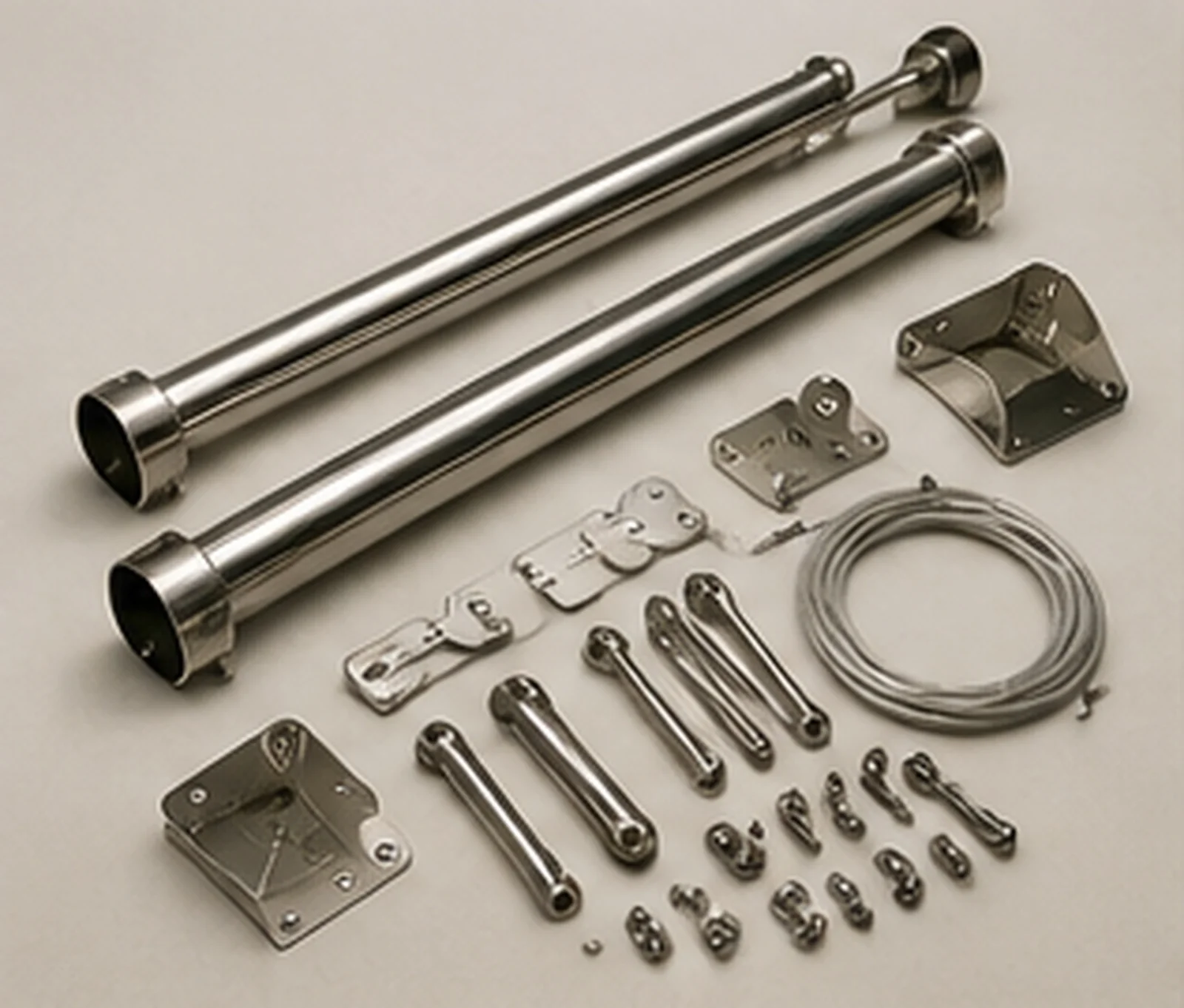
- Electropolished 316L stainless steel construction.
- Single-person operation under appropriate conditions.
Manual operation still requires suitable physical capability, proper installation, routine maintenance, and adherence to the approved operating instructions.
Explore the SeaWise Manual Davit System for more product information.
Electric Davit System
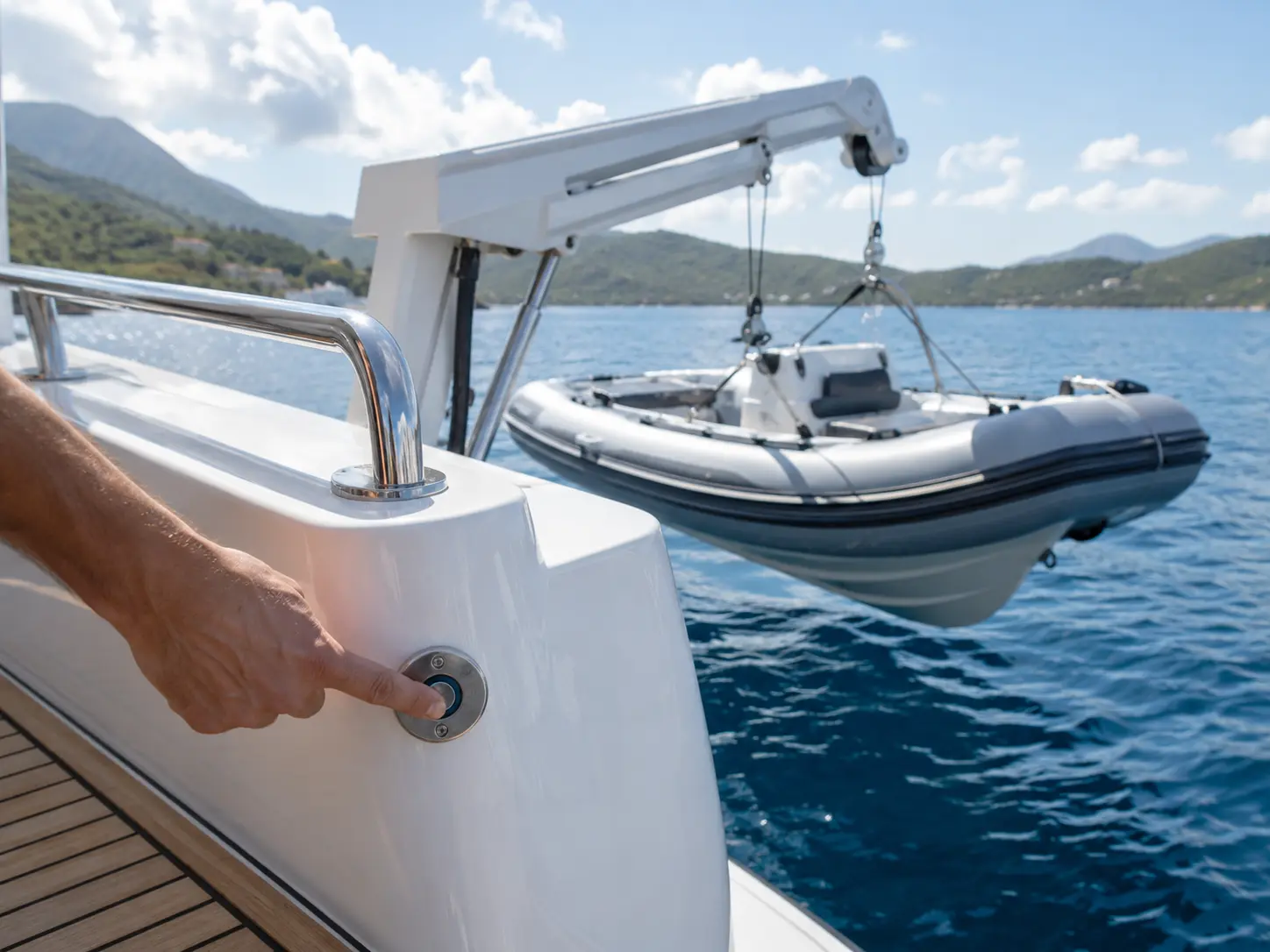
The SeaWise Electric Davit System provides switch-operated lifting for compatible dinghies and tenders.
Its supplied product specifications include:
- Lifting capacity up to 650 lbs (295 kg).
- Switch-operated launching and retrieval.
- Automatic maintenance of outboard orientation.
- Electropolished 316L stainless steel construction.
- An emergency-release feature described in the product brochure.
The presence of an emergency-release feature does not establish that a tender can always be deployed during a power failure or other emergency. Operators must understand the approved procedure and operating limitations of their particular configuration.
Review the SeaWise Electric Davit System for model-specific information.

What Should You Check Before Launching a Dinghy?
Preparation helps reduce avoidable problems during tender handling.
The following considerations are general checks and are not a substitute for the operating procedure supplied with your davit system.
1. Confirm the Fully Loaded Tender Weight
Verify the weight of the dinghy and all equipment included in the suspended load.
This may include the outboard motor, fuel, batteries, steering equipment, and accessories.
Do not assume that the dinghy’s advertised dry weight represents its actual lifting weight.
Our boat davit sizing guide explains the considerations involved in choosing a suitable lifting system.
2. Inspect the Davit and Mounting Arrangement
Before operation, follow the manufacturer’s inspection requirements.
Look for visible damage, unusual wear, loose components, or changes in operation. Where an inspection identifies a concern, stop and obtain appropriate guidance before using the equipment.
3. Assess the Surrounding Conditions
Consider vessel movement, nearby obstacles, available clearance, and the safety of everyone in the area.
Avoid starting the operation when environmental conditions fall outside the system’s approved operating limitations.
4. Follow the Model-Specific Launching Procedure
Use only the controls, securing arrangements, and sequence described in the manufacturer’s instructions for your davit model and installation.
Do not improvise release procedures, bypass retaining mechanisms, or assume that a procedure demonstrated on another vessel applies to your own.
5. Confirm the Tender Is Ready for Its Intended Use
Follow the tender manufacturer’s requirements and applicable boating rules before operating the dinghy.
Check the relevant safety equipment, propulsion, fuel, and passenger arrangements appropriate to the intended trip.
Can You Launch a Dinghy in 45 Seconds?
A fast launch may be possible in some individual installations under favourable conditions, but 45 seconds should not be treated as a guaranteed SeaWise launching time.
Actual launching time depends on factors such as:
- Manual or electric system configuration.
- Tender size, weight, and mounting geometry.
- Vessel movement and weather.
- Operator experience.
- Necessary securing, clearance, and readiness checks.
A reported customer launch time may describe that customer’s experience but does not establish a universal performance specification.
The priority should always be safe, controlled operation in accordance with the manufacturer’s instructions.

Can You Launch a Dinghy During a Marine Emergency?
A tender may have practical uses during normal boating activities, but it should not automatically be regarded as a replacement for required emergency or lifesaving equipment.
Whether a dinghy is suitable for a particular emergency situation depends on the vessel, conditions, applicable regulations, tender capability, and approved operating procedures.
Do not assume that a davit system can launch a tender safely during rough weather, loss of electrical power, or vessel instability.
Owners and operators should maintain appropriate emergency plans and equipment and follow relevant official boating safety guidance.
For regulatory context, see Marine Safety Regulations and Safe Dinghy Davit Handling.
Why Outboard Orientation Matters During Tender Handling
Some tender arrangements require the outboard motor to be removed or repositioned before storage or launching.
SeaWise davit systems are designed to maintain the outboard motor’s orientation during compatible launching and retrieval operations.
This design can reduce the need for repeated outboard handling when the vessel, tender, motor, and davit configuration are suitable.
However, the ability to leave an outboard attached must be confirmed for the complete installed system and fully loaded tender.
For additional information about motor-on tender storage, see Removing the Outboard Motor: Tender Storage Considerations.
Maintaining a Davit System for Reliable Operation
Routine maintenance is an important part of owning any lifting system.
Although SeaWise davits use electropolished 316L stainless steel components, corrosion resistance does not mean equipment is immune to wear, damage, or deterioration.
Follow the approved maintenance instructions and arrange an appropriate inspection if you notice:
- Unusual resistance during operation.
- Visible damage or deformation.
- Unexpected noises or movement.
- Loose or deteriorated components.
- Changes in lifting or lowering behaviour.
Do not force equipment that is difficult to operate or attempt unsupported adjustments.
Learn more in our Boat Davit System Maintenance Guide.
Choosing Between Manual and Electric Davits
The appropriate system depends on more than lifting capacity.
Boat owners should consider the fully loaded tender weight, vessel structure, mounting arrangements, operating preferences, and available electrical configuration.
| Feature | Manual Davit System | Electric Davit System |
|---|---|---|
| Lifting capacity | Up to 450 lbs (204 kg) | Up to 650 lbs (295 kg) |
| Operation | Geared hand crank | Switch-operated |
| Outboard orientation | Automatically maintained | Automatically maintained |
| Construction | Electropolished 316L stainless steel | Electropolished 316L stainless steel |
| Warranty | 5-year limited warranty | 5-year limited warranty |
Figures reflect the supplied SeaWise product information. Current configuration suitability and warranty terms should be confirmed with the manufacturer.
Compare the options in our manual vs electric davit system guide.
Frequently Asked Questions
How quickly can a SeaWise davit system launch a dinghy?
Launch time varies with the installed system, tender, operating conditions, and user experience. SeaWise’s supplied product information does not establish a universal 45-second launching guarantee.
Can I launch a dinghy with the outboard motor attached?
SeaWise davit systems are designed to maintain outboard orientation during compatible operations. The complete loaded tender and vessel installation must meet the approved requirements.
Does the manual davit require electricity?
The geared hand-crank lifting mechanism does not require electrical lifting power. Operators must still follow the approved manual procedures and maintenance requirements.
Does the electric davit have an emergency release?
The supplied SeaWise brochure identifies an emergency-release feature for the electric model. Its actual operating procedure and limitations should be verified for the installed configuration.
Can a dinghy replace a liferaft or other required survival equipment?
Not automatically. Required lifesaving equipment depends on the vessel and applicable regulations. A recreational tender should not be presented as an approved substitute without appropriate certification and regulatory support.
What should I do if the davit becomes difficult to operate?
Stop using the equipment and consult the model-specific operating and maintenance instructions. Contact SeaWise or an appropriately qualified service provider before resuming operation if the cause is uncertain.
Find the Right Davit System for Your Boat
SeaWise Marine manufactures manual and electric davit systems for compatible dinghies and tenders.
If you’re planning an installation, the team can help you review your vessel details, tender configuration, and the product options available for your application.
Request a Vessel-Specific Quote