Electric vs. Manual Boat Davits: How to Choose the Right System
Choosing between electric vs. manual boat davits depends on your dinghy’s fully loaded weight, your vessel’s mounting arrangement, and how you prefer to launch and retrieve your tender. Both systems can offer convenient dinghy handling, but they differ in lifting capacity, power requirements, operating method, and installation considerations.
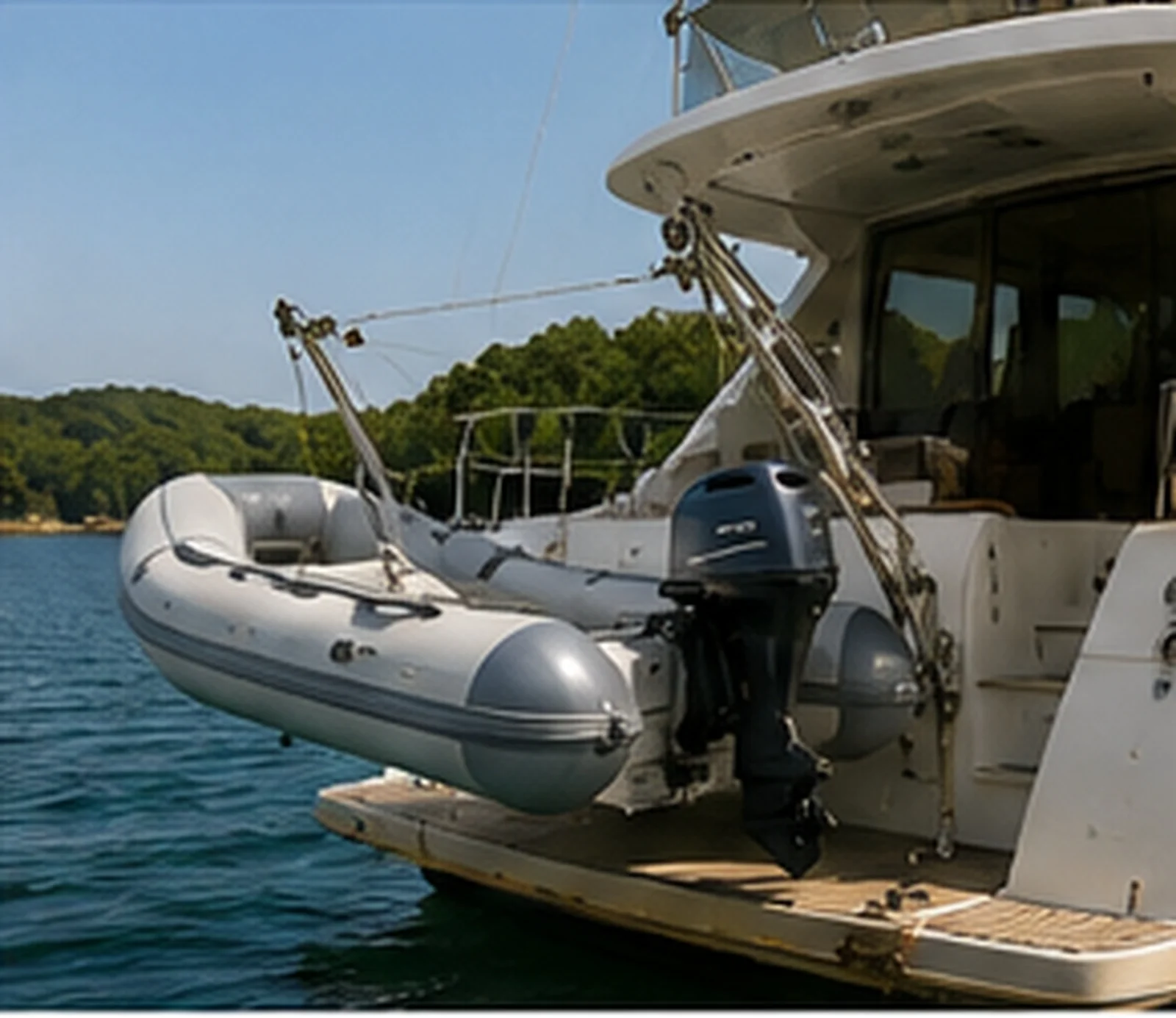
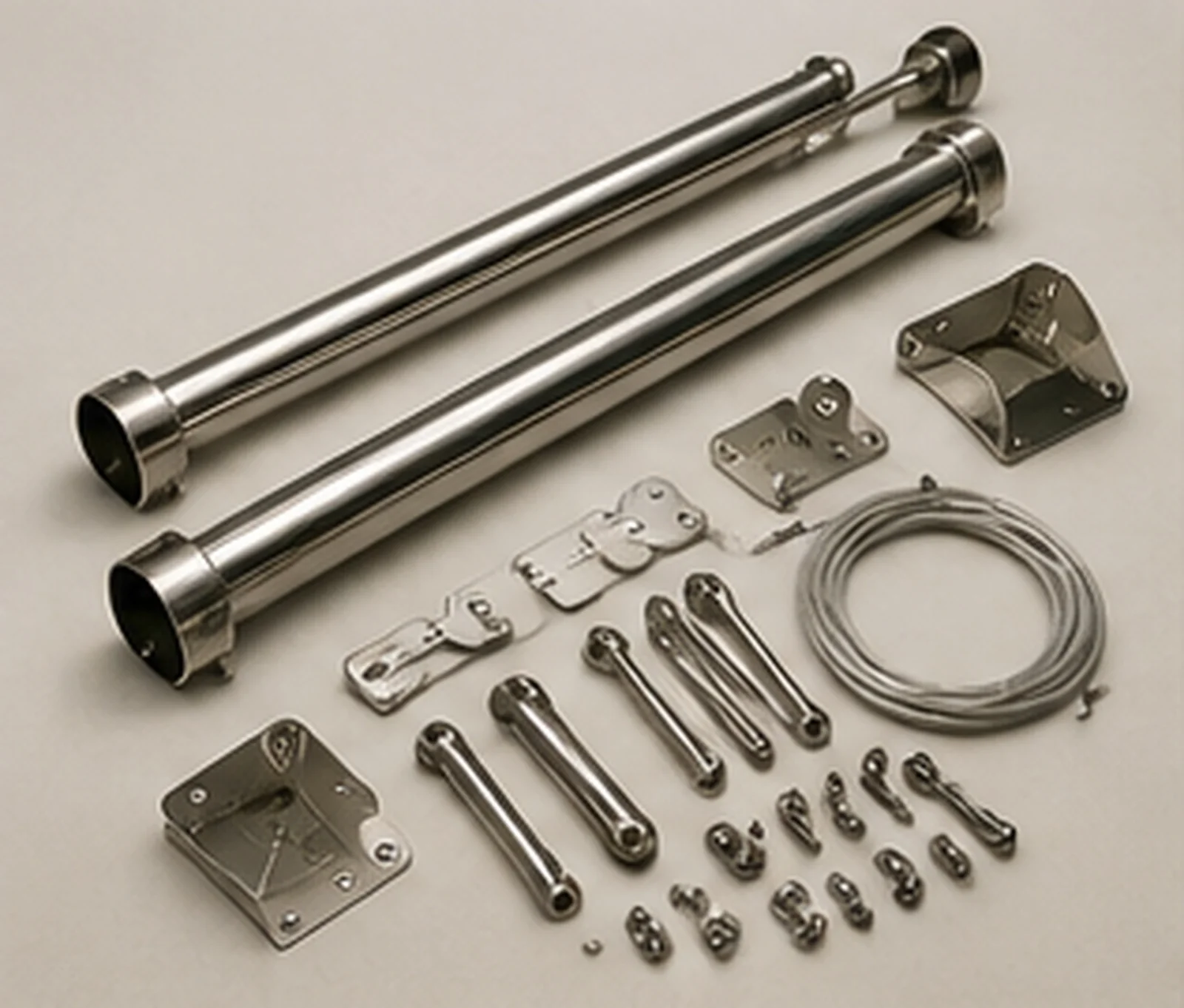
At SeaWise Marine, we offer manual and electric boat davit systems designed for compatible dinghies and tenders. Both systems use electropolished 316L stainless steel components and are designed to maintain the outboard motor’s orientation during launching and retrieval.
If you’re comparing davit systems for your boat, this guide explains the differences, helps you understand which option may be suitable, and identifies the information you’ll need before requesting a recommendation.
Electric vs. Manual Boat Davits: Quick Comparison
The main difference between electric and manual davits is how the lifting mechanism operates.
Electric davits use powered lifting, while manual davits use a geared hand crank. Your choice should account for the complete tender load, operating preferences, vessel configuration, and approved installation requirements.
| Feature | Electric Davit System | Manual Davit System |
|---|---|---|
| Maximum published lifting capacity | Up to 650 lbs (295 kg) | Up to 450 lbs (204 kg) |
| Lifting method | Switch-operated electric lifting | Geared hand-crank lifting |
| Electrical lifting power | Required | Not required |
| Outboard orientation | Automatically maintained | Automatically maintained |
| Operation | Designed for single-person use under approved conditions | Designed for single-person use under approved conditions |
| Construction | Electropolished 316L stainless steel | Electropolished 316L stainless steel |
| Emergency release | Feature identified in supplied brochure | Not specified in supplied brochure |
| Warranty | 5-year limited warranty | 5-year limited warranty |
The specifications above reflect the SeaWise product information supplied for this content update. Current capacity ratings, approved configurations, warranty scope, and installation requirements should be confirmed with SeaWise before purchase.
Quick answer: Choose a manual davit if your compatible tender is within the approved 450 lb capacity and you prefer hand-crank operation. Consider an electric davit if you want powered lifting and your compatible tender is within its approved 650 lb capacity. Neither option should be selected on lifting capacity alone.
What Is an Electric Boat Davit System?
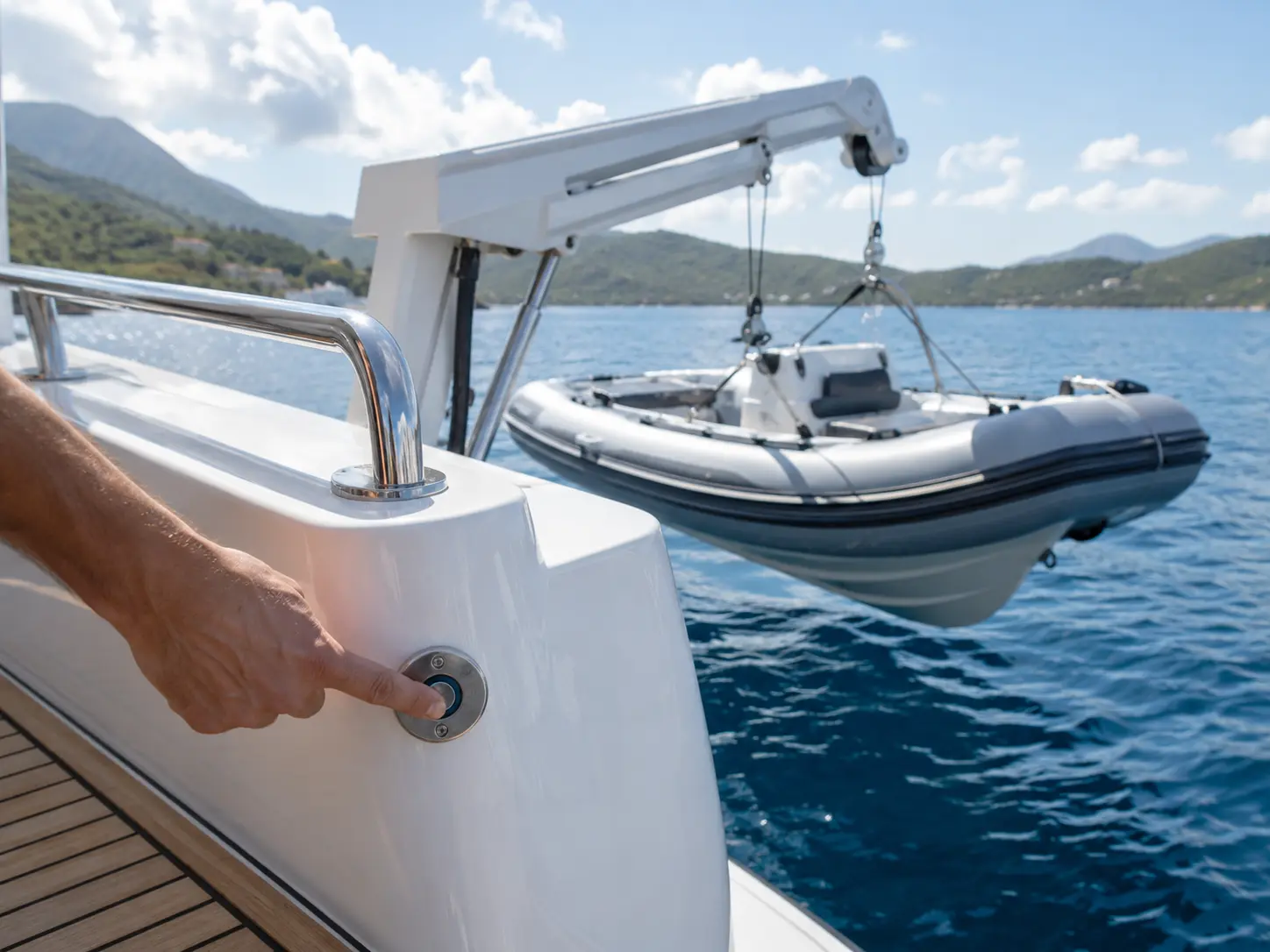
An electric boat davit system uses powered lifting controls to help raise and lower a compatible dinghy.
The SeaWise Electric Davit System provides switch-operated operation, allowing users to manage lifting and lowering without continuously turning a manual crank.
Benefits of Electric Davits
Powered lifting convenience
Switch-operated lifting can reduce the physical effort associated with manual cranking. This may be helpful for boaters who frequently launch and retrieve their tenders.
Higher published lifting capacity
The SeaWise Electric Davit System has a published lifting capacity of up to 650 lbs (295 kg), compared with 450 lbs (204 kg) for the manual system.
This additional capacity may make the electric option worth considering for certain heavier dinghies and RIBs, provided the complete installation meets the manufacturer’s requirements.
Outboard orientation
The system is designed to maintain outboard motor orientation during compatible lifting and lowering operations, reducing the need to repeatedly remove the motor for routine tender handling.
Single-person operation
The electric system is designed for operation by one person under appropriate conditions and in accordance with the approved instructions.
What Should You Consider Before Choosing an Electric Davit?
Electric davits require an appropriate power supply and electrical installation.
Before selecting a model, confirm:
- The fully loaded tender weight.
- The main vessel’s mounting suitability.
- Available clearance around the swim platform and transom.
- Approved electrical requirements.
- Installation and maintenance needs.
- Emergency-release procedures and limitations.
Although the SeaWise electric system includes an emergency-release feature, boat owners should not assume this provides unrestricted operation during every power-loss or emergency situation.
Learn more about the SeaWise Electric Davit System, including current specifications and product information.

What Is a Manual Boat Davit System?
A manual boat davit system uses a mechanical lifting arrangement operated through a hand crank.
The SeaWise Manual Davit System uses a geared hand-crank mechanism, allowing users to launch and retrieve compatible dinghies without electrical lifting power.
Benefits of Manual Davits
No electrical lifting power required
Manual operation does not rely on the vessel’s electrical system for the lifting mechanism.
This can appeal to boaters who prefer mechanically operated equipment.
Geared hand-crank operation
The geared lifting mechanism supports controlled manual operation for compatible tenders.
Actual operating effort depends on the system, tender load, equipment condition, and approved operating arrangement.
Suitable for lighter compatible tenders
The published lifting capacity is up to 450 lbs (204 kg).
This may suit certain inflatable dinghies and smaller RIBs when the complete loaded weight and vessel installation meet the applicable requirements.
Outboard orientation
Like the electric system, the manual davit is designed to maintain the outboard motor’s orientation during compatible tender handling.
What Should You Consider Before Choosing a Manual Davit?
A manual davit requires hand-crank operation.
Before purchasing, evaluate the full tender weight, mounting requirements, operating conditions, and your ability to use the equipment according to the manufacturer’s instructions.
The manual davit’s lower published capacity also means it may not be appropriate for certain heavier tenders.
Explore the SeaWise Manual Davit System for additional product information.
Which Davit Is Better for Your Dinghy Weight?
Tender weight is one of the most important factors in selecting a davit system.
However, the relevant number is not simply the dinghy manufacturer’s advertised dry weight.
The complete load may include:
- Dinghy hull and tubes.
- Outboard motor.
- Fuel and batteries.
- Steering console or tiller equipment.
- Installed hardware and accessories.
- Other equipment remaining aboard during lifting.
Example: A 400 lb Loaded Tender
Consider a hypothetical dinghy with a fully loaded weight of 400 lbs.
That total is below the supplied published lifting capacities of both SeaWise systems.
However, this does not automatically mean either installation is approved. The main vessel, tender dimensions, mounting arrangement, and other manufacturer requirements still need evaluation.
A manual davit might be considered if hand-crank operation is preferred. An electric system may be considered if powered lifting better suits the owner’s needs.
Example: A 550 lb Loaded Tender
A hypothetical tender weighing 550 lbs exceeds the supplied 450 lb manual davit capacity.
It is below the supplied 650 lb electric capacity, making the electric option a potential candidate for further compatibility review.
The electric davit should only be selected if the complete configuration meets the manufacturer’s approved requirements.
What If Your Dinghy Weighs More Than 650 lbs?
A fully loaded tender exceeding the supplied 650 lb electric capacity should not be lifted using either of the listed SeaWise configurations.
Do not assume an upgraded component, different bracket, or stronger power source increases the approved capacity of the complete system.
Contact SeaWise about suitable alternatives and confirm any separately approved configurations before purchasing.
For more detail, read How to Determine the Right Boat Davit Size.
Electric vs. Manual Davits: Which Is Easier to Operate?
Electric davits use powered controls, while manual davits require the user to turn a geared hand crank. For boaters who frequently use their dinghy, powered lifting may offer an operating convenience. Manual operation may appeal to owners who prefer a system that does not require electrical lifting power.
Neither system should be described as universally effortless or guaranteed safe under every condition. Ease of operation depends on the tender, installation, equipment condition, and the individual operator.
Both systems must be used in accordance with their approved operating instructions.
Which Davit Is Better for Frequent Dinghy Use?
If you regularly launch and retrieve your dinghy during cruising trips, operating convenience may be an important factor.
An electric system can be useful when you prefer switch-operated lifting. A manual davit may still be suitable when the load is compatible and hand-crank operation meets your needs.
Consider how frequently you use the tender, how it is stored, and whether the installation provides appropriate access and clearance.
The fastest or most convenient arrangement is not necessarily the best choice if the tender exceeds the approved load or the mounting configuration is unsuitable.
For launching considerations, see How to Launch a Dinghy Safely.
How Does Vessel Compatibility Affect Your Choice?
Choosing between electric and manual davits involves more than selecting a lifting mechanism.
Your boat must also provide a suitable installation location.
Swim Platform and Transom Structure
The mounting area needs to be assessed for the intended davit configuration and loads.
Swim-platform construction varies widely between vessels, and a mounting method used on one boat may not be appropriate for another.
Tender Dimensions and Clearance
The davit installation must provide adequate space for the tender, outboard motor, and lifting movement.
A stored dinghy may affect boarding access, platform use, or the space behind the transom.
Weight Distribution
The main vessel must be suitable for the installed davit system and tender load.
An appropriate assessment considers the installed arrangement, not just the capacity of an individual lifting component.
For installation considerations, read Can I Install a SeaWise Davit Myself?.

Which Davit System Is Better for a Heavy RIB?
Some rigid inflatable boats carry substantial additional weight from their hull, center console, outboard motor, fuel, and equipment.
The electric system’s higher published lifting capacity may make it a candidate for certain heavier RIBs.
However, an electric davit is not automatically suitable for every heavy tender.
A loaded RIB must be assessed against the approved system capacity, available mounting space, structural requirements, and operating limitations.
Our heavy RIB davit selection guide explores these considerations in greater detail.
Do Electric or Manual Davits Require More Maintenance?
Both types of davit systems require appropriate inspection and maintenance.
SeaWise systems feature electropolished 316L stainless steel components, which offer corrosion resistance in marine environments. However, corrosion-resistant materials are not immune to wear, damage, contamination, or deterioration.
Maintenance requirements differ according to the installed model and operating environment. Follow the manufacturer-approved inspection and maintenance instructions for your system.
If equipment develops unusual resistance, visible damage, unexpected noise, or irregular movement, stop operation and seek appropriate guidance.
For general ownership considerations, see our Boat Davit System Maintenance Guide.
How Much Do Electric and Manual Davits Cost?
Cost is another important factor in the electric-versus-manual decision.
The final purchase and installation cost may depend on:
- Selected davit model and configuration.
- Vessel mounting requirements.
- Electrical work, where applicable.
- Tender dimensions and approved installation needs.
- Professional installation requirements.
- Shipping and applicable taxes.
Manual davits and electric davits have different mechanical and operating arrangements, but it is important to compare current quotations rather than assuming a fixed price difference.
A complete cost comparison should include the equipment, installation, and ongoing ownership considerations.
Read How Much Do Dinghy Davits Cost? for more buying considerations.
How to Choose Between an Electric and Manual Boat Davit
Use the following questions to narrow your options before requesting a recommendation.
| Question | Why It Matters |
|---|---|
| What is the fully loaded tender weight? | Establishes whether the tender falls within a published lifting capacity |
| What are the tender’s dimensions? | Helps evaluate storage and operating clearance |
| What is the main vessel’s make and model? | Supports mounting and structural compatibility review |
| Do you prefer powered or hand-crank lifting? | Helps identify the preferred operating method |
| Does the vessel support the required electrical installation? | Important for electric davit selection |
| How often will you launch the dinghy? | Helps assess operating preferences |
| Is professional installation required? | Influences project planning and cost |
Consider a Manual Davit When
Your tender is within the approved manual lifting capacity, the mounting configuration is compatible, and you prefer geared hand-crank operation without electrical lifting power.
Consider an Electric Davit When
Your tender is within the approved electric lifting capacity, your vessel meets the installation requirements, and you prefer powered lifting.
Request Additional Guidance When
The loaded tender weight is uncertain, the main vessel’s structure requires assessment, or the tender may exceed the published capacities.
In those cases, confirm the specifications before buying rather than relying on assumptions.
For a broader selection framework, see Choosing the Right Boat Davit System.
Frequently Asked Questions
Which is better: electric or manual boat davits?
Neither option is best for every vessel. Electric davits provide powered lifting, while manual davits use a geared hand crank. The appropriate choice depends on loaded tender weight, installation compatibility, and operating preferences.
What is the maximum lifting capacity of a SeaWise electric davit?
The supplied SeaWise product information lists up to 650 lbs (295 kg), subject to approved model and installation requirements.
What is the maximum lifting capacity of a SeaWise manual davit?
The supplied product information lists up to 450 lbs (204 kg), subject to the approved configuration and operating requirements.
Can I use a manual davit without a battery?
The SeaWise manual davit’s geared hand-crank lifting mechanism does not require electrical lifting power. Follow the manufacturer’s approved operating procedures.
Is an electric davit suitable for a heavier inflatable tender?
It may be suitable for certain heavier tenders within its approved capacity. The fully loaded weight, outboard arrangement, vessel structure, and mounting requirements must also be considered.
Can the outboard motor remain attached?
SeaWise systems are designed to maintain outboard motor orientation during compatible launching and retrieval operations. Motor-on suitability depends on the complete tender configuration and approved installation.
Are electric davits faster than manual davits?
Powered operation may be more convenient for some users, but actual launching and retrieval times vary with the tender, installation, conditions, and operator. No universal speed guarantee should be assumed.
Do SeaWise davits require maintenance?
Yes. Both manual and electric systems require inspection and maintenance in accordance with manufacturer-approved instructions.
Can I install a davit system myself?
That depends on the vessel, selected system, installation requirements, and your qualifications. Structural assessment or professional installation may be necessary.
How do I know which SeaWise davit fits my boat?
Provide SeaWise with your main vessel details, tender make and model, fully loaded weight, outboard specifications, and available mounting dimensions for a compatibility review.
Compare SeaWise Davit Systems and Request a Quote
Choosing the right boat davit begins with accurate tender information and a clear understanding of your vessel’s installation requirements.
SeaWise Marine offers manual and electric davit systems for compatible dinghies and tenders.
If you’re unsure which option suits your vessel, the team can review your equipment details and discuss the available configurations.
Explore the SeaWise Manual and Electric Davit Systems or browse the SeaWise installation gallery to see different tender storage arrangements.
Phone: 604-946-0551
Email: derek@seawisemarine.com