Saltwater is the ultimate test for any piece of boat equipment. While freshwater is relatively gentle, the ocean is a harsh environment filled with salt, humidity, and constant moisture. If you use the wrong hardware, your shiny new davit system can turn into a rusty, seized-up mess in just one season.
In this guide, we will explore why material choice is the most important factor for ocean boaters and how to find the best dinghy davit for saltwater use.
What is the Best Dinghy Davit for Saltwater?
The best dinghy davit for saltwater use is one constructed entirely from high-grade 316L stainless steel with a mirror-polished finish. Saltwater boaters should look for systems with sealed mechanical parts and “motor-on” storage capabilities to prevent corrosion. For maximum durability, Canadian-made 316L stainless steel is the gold standard for resisting pits and rust in marine environments.
Why Saltwater is the Ultimate Test for Your Boat Hardware
If you have ever left a piece of cheap metal near the beach, you know what happens next. The salt in the air and water creates a chemical reaction called “electrolysis” and oxidation. This causes most metals to rust, flake, and eventually snap.
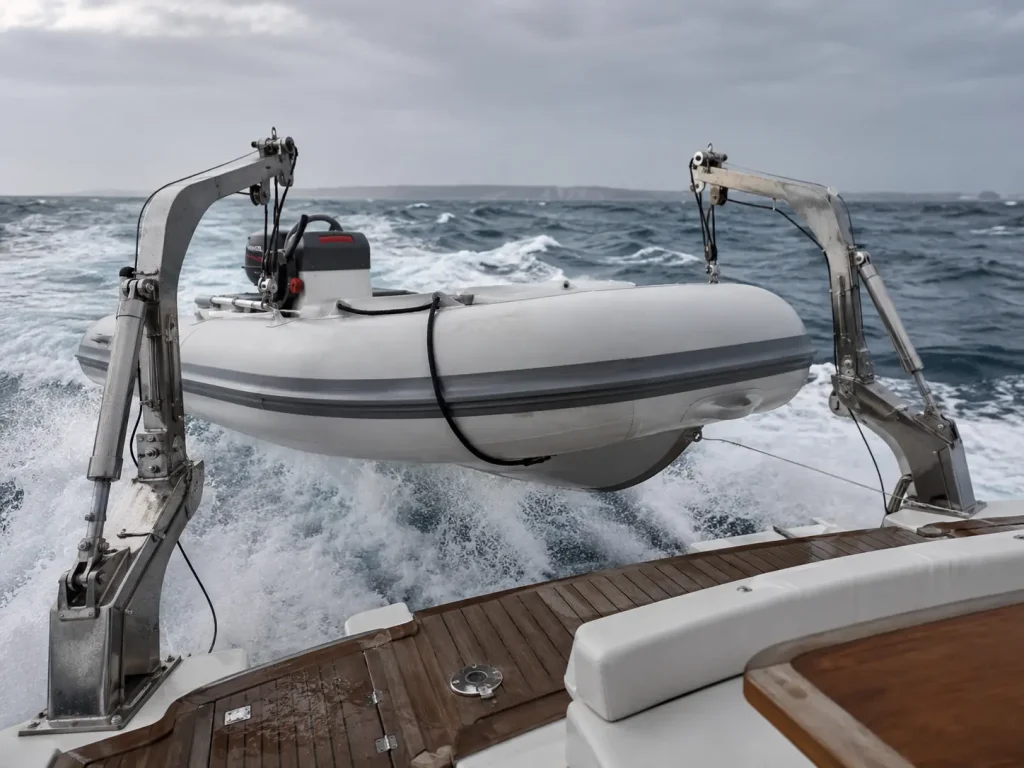
When it comes to your dinghy, a failure isn’t just an eyesore, it’s a safety hazard. You need a system that stays strong even when it is covered in salt spray every day. This is why many boaters choose Sea-Wise systems; they are engineered to launch your dinghy in seconds, regardless of how long they have been exposed to the sea.
The Secret Ingredient: Why 316L Stainless Steel is a Must
Not all “stainless steel” is the same. Many cheap davits use 304-grade steel. While this looks okay at first, it will quickly develop “tea staining” (brown rust spots) in saltwater.
The only real choice for the ocean is 316L Stainless Steel.
- Corrosion Resistance: 316L contains molybdenum, which helps it resist “pitting” caused by salt.
- Low Carbon: The “L” stands for low carbon, which makes the metal easier to weld without losing its rust-fighting powers.
- Longevity: A high-quality system made from 316L Stainless Steel from Canada can last for decades with very little maintenance.
Choosing Between Electric and Manual Davits for the Ocean
Both systems work well in the salt, but they have different needs.
Manual Davits in Saltwater
A manual boat davit is a favorite for many sailors and cruisers because it has no wires. However, saltwater can still find its way into the gears. If the salt builds up inside the mechanism, you might find your manual handle is hard to turn. This is why choosing a system with high-tolerance engineering is vital.
Electric Davits and Marine-Grade Seals
If you want the convenience of an electric davit system, you must ensure the motor and wiring are properly sealed. Sea-Wise electric motors are designed for the marine environment, ensuring the salt stays out of the electrical components.
For a deeper look at which one fits your lifestyle, read our full comparison of electric vs. manual davits.
Essential Features for Saltwater Performance
When shopping for the best saltwater davit, look for these specific design features:
1. Mirror-Polished Finish
A “brushed” finish might look modern, but it has tiny grooves where salt can hide. A mirror-polished finish is smooth. This makes it much harder for salt crystals to stick to the metal, and much easier for you to rinse off with fresh water.
2. Self-Draining Design
You don’t want water sitting inside the tubes of your davit. The best systems are designed to let water drain out naturally, preventing “hidden” rust from forming on the inside.
3. High Weight Capacity
Ocean waves put more stress on a davit than a calm lake. You need a system that can handle the weight of your tender plus the extra force of the boat bouncing in the waves. Always determine the right davit size before you buy to ensure you have a safety margin.
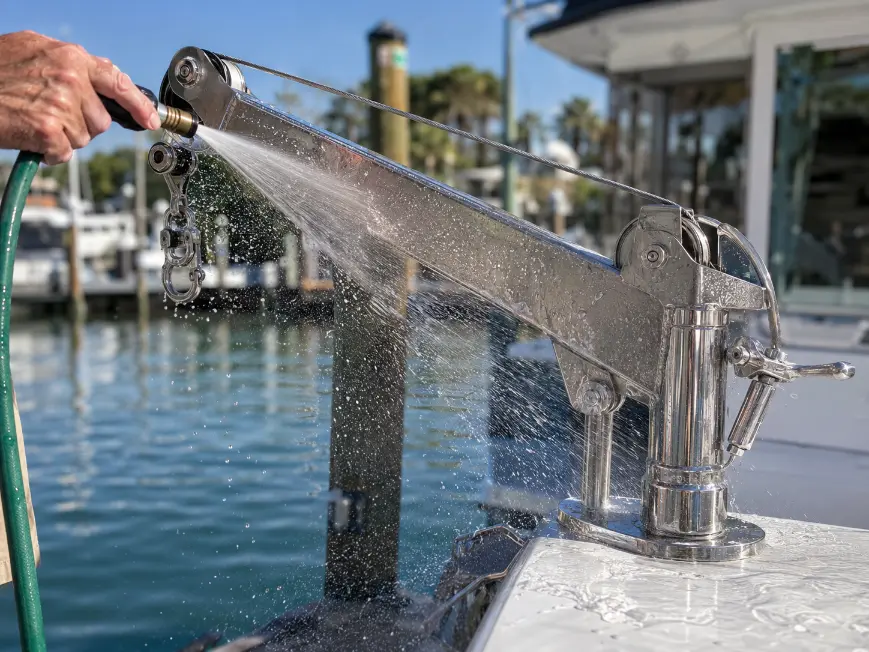
Saltwater Maintenance Checklist to Prevent Failures
Even the best 316L stainless steel needs a little help to survive the ocean. If you are a saltwater boater, follow this checklist:
- The Freshwater Rinse: This is the #1 rule. After every trip, spray your davit system down with fresh water. It takes 30 seconds but adds years to the life of the metal.
- Watch the Steering: Saltwater is famous for causing a seized steering cable on dinghies. If your dinghy isn’t steering right, it can put uneven weight on your davit.
- Lubrication: Use a high-quality marine grease on any moving joints or pivot points. This creates a barrier that salt cannot penetrate.
- Follow the Guide: Stay on top of your boat davit system maintenance schedule to catch small issues before they become big repairs.
Installation Tips for Ocean-Going Vessels
Installing a davit for saltwater use requires a bit more care. You need to ensure that the mounting points on your transom are perfectly sealed. If saltwater leaks behind the davit mount, it can rot the core of your boat.
If you are wondering, “Can I install a Sea-Wise davit myself?“, the answer is yes, but you must use plenty of marine-grade sealant (like 3M 4200 or 5200) on every bolt hole. For those who want peace of mind, we have area reps who can handle the installation for you.
Protecting Your Investment in the Salt
Buying a dinghy davit is an investment in your freedom and your boat’s value. In the world of saltwater boating, “cheap” hardware ends up being the most expensive because you have to replace it so often.
By choosing a system built from premium 316L stainless steel and designed specifically for the ocean, you spend less time cleaning rust and more time enjoying the water.
Ready to upgrade to a saltwater-ready system?
- Visit our Gallery to see our stainless steel in action.
- Contact Sea-Wise today for a custom recommendation for your boat.
- Check out our Happy Clients to see why ocean boaters trust us.